BioStacks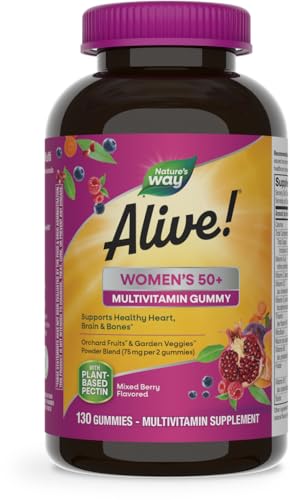
Best for
Ingredients (24)
Vitamin C
100%Dose
120 mg
Target
25–200 mg
Form
Standard
Biotin
100%Dose
3000 mcg
Target
1000–5000 mcg
Form
—
Pantothenic Acid
27%Dose
13.5 mg
Target
50–500 mg
Form
Premium
Vitamin E
40%Dose
20 mg
Target
50–268 mg
Form
Premium
Vitamin A
100%Dose
1500 mcg RAE
Target
700–1500 mcg
Form
Budget
Other Ingredients (14)
Polysorbate 80Emulsifier
Chassaing et al. 2015 (Nature, PMID 25731162) tested polysorbate 80 directly and showed it thinned the gut mucus barrier, altered microbiota composition, and induced low-grade inflammation and metabolic syndrome in mice. The strongest human evidence is for a related emulsifier rather than polysorbate 80 itself: Chassaing 2022 (Gastroenterology, PMID 34774538) was a controlled human feeding RCT of carboxymethylcellulose (CMC) that found microbial encroachment into the mucus layer — polysorbate 80 has not been tested in an equivalent human trial. In vitro work (e.g. Roberts 2010) shows polysorbate 80 enhances bacterial translocation across intestinal epithelium, and observational data link overall dietary-emulsifier exposure to IBD risk. EFSA is mid re-evaluation of polysorbates (E432–E436). For a supplement excipient with purely cosmetic function (improving the look/texture of soft gels and liquids), the gut-barrier risk profile is unfavorable when safer alternatives (sunflower lecithin, MCT carriers, gum acacia) are widely available.
SucraloseSweetener
Dose context matters. As a trace excipient in a tablet coating or capsule, the amount is minimal and not a meaningful concern. The evidence below applies to the gram-level intakes typical of sweetened protein powders, pre-workouts, and drink mixes: a 2022 human trial (Suez et al., Cell) showed sucralose disrupts gut bacteria and worsens blood sugar control in healthy adults, and a 2023 study (Schiffman et al.) found that sucralose-6-acetate — a compound formed when sucralose is digested — was genotoxic to human cells in vitro. It remains an artificial sweetener with no nutritional purpose.
Titanium DioxideColorant
Banned in the EU (2022) over concerns that its ultra-fine particles may damage DNA in gut cells. Still allowed in the US. Used only for white coloring — provides no health benefit.
Magnesium StearateLubricant
A salt of stearic acid used as a lubricant in tablet and capsule production
Natural FlavorsFlavor
Broad regulatory category of flavor constituents derived from natural sources. Composition is proprietary and not disclosed — 'Natural Flavors' can include several hundred different compounds depending on the target flavor profile, including hexane-extracted constituents and proprietary carrier solvents. 'Natural' is a regulatory definition (21 CFR §101.22), not a safety guarantee.
Polyethylene Glycol (Coating)Coating
A polyether polymer used as a tablet coating and plasticizer
Silicon DioxideAnti-caking
Fine silica powder used to prevent clumping
MonoglyceridesEmulsifier
Glycerol monoesters of fatty acids used as emulsifiers and processing lubricants
How to Take It
Take it anytime
No evidence a formula this broad works better at any particular hour. Take it with a meal containing fat — the vitamins A, D and E in it absorb poorly without one.
With a meal containing fat
Keep it away from high-oxalate foods like spinach
Space it a couple of hours from Iron and Magnesium
On the label
As a dietary supplement, take two caplets daily with food.
General guidance based on the ingredients, not a substitute for the label or your doctor.
Price Check
$17.99
Cheaper than 73% of 798 multivitamins
Track this supplement in your stack
Get personalized insights, interactions, and coverage recommendations.
Get Started FreeSimilar Supplements
CVS Health
Hair, Skin & Nails
🦷 for Dental
0
Nature's Way
Alive! Women's 50+ Gummy Multivitamin
🛡️ for Immune
44
Nature's Way
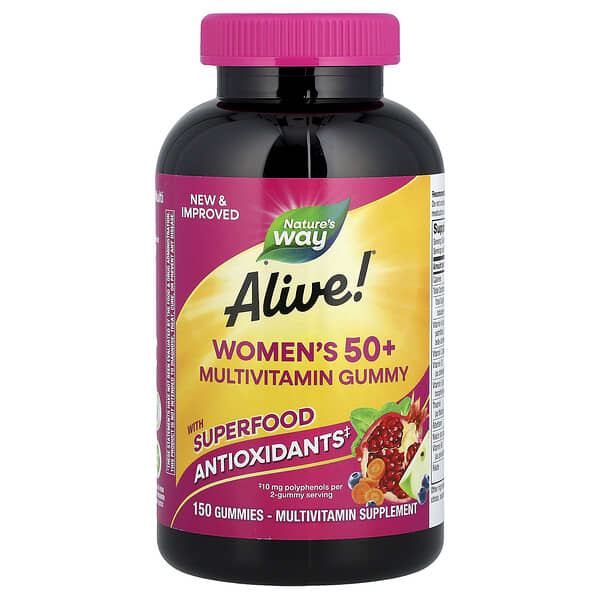
Alive!® Women's 50+ Multivitamin Gummy, Mixed Berry
🛡️ for Immune
42
Jamieson
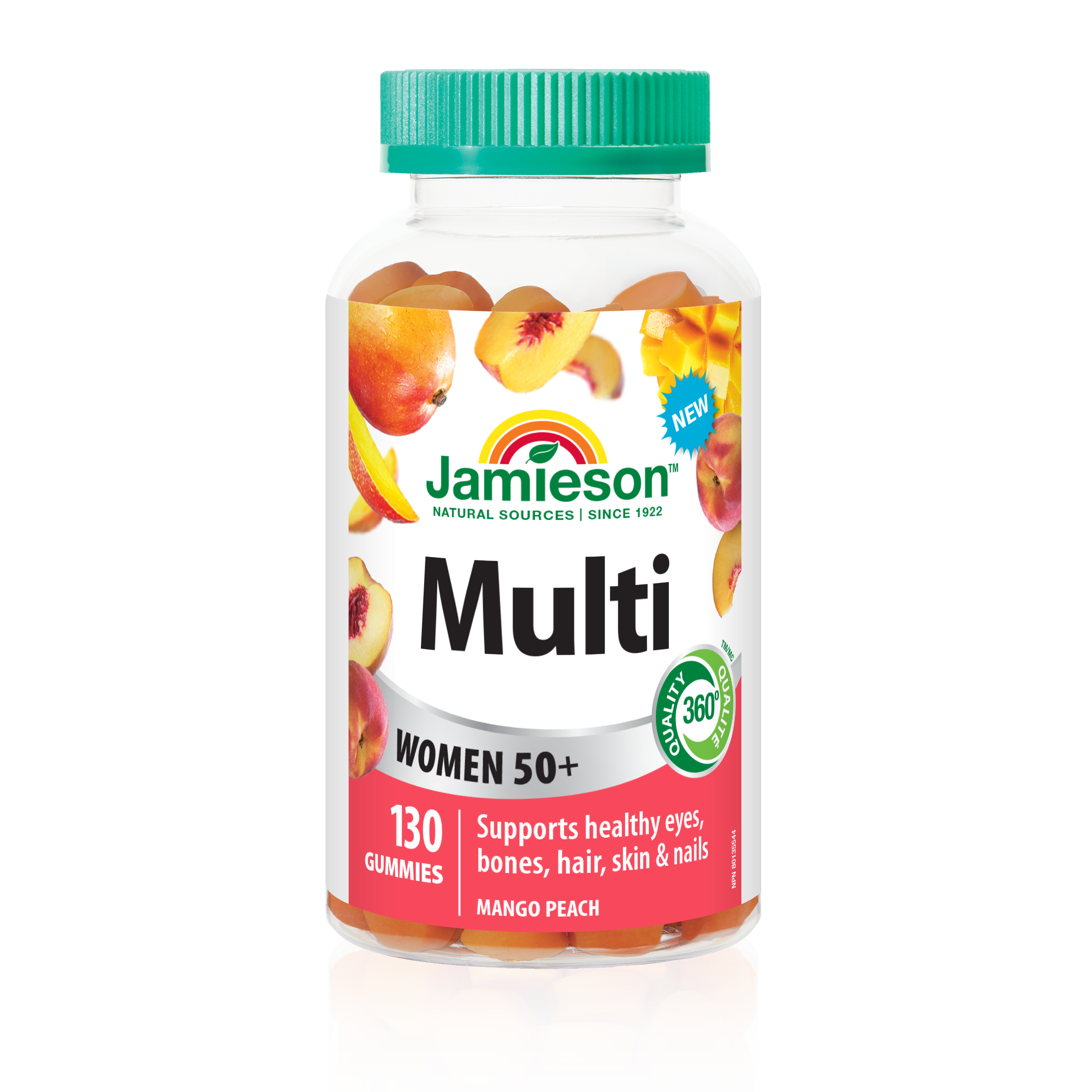
Multivitamin Gummies for Women 50+
🛡️ for Immune
44
Nature's Bounty
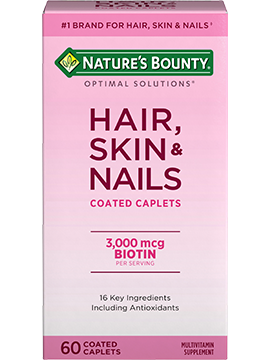
Hair, Skin & Nails 3000 mcg Biotin
🦷 for Dental
51
Sources & Scoring
Nutrient data (RDA, UL, and safety thresholds) sourced from the NIH Office of Dietary Supplements and the National Academies Dietary Reference Intakes (DRI).
This is not medical advice. Consult a healthcare provider before making changes to your supplement routine.
The score analyzes what's on the label: ingredient doses vs. studied ranges, chemical forms, evidence levels, and known interactions. It does not verify label accuracy or test for contaminants — for that, look for third-party certifications like USP or NSF.