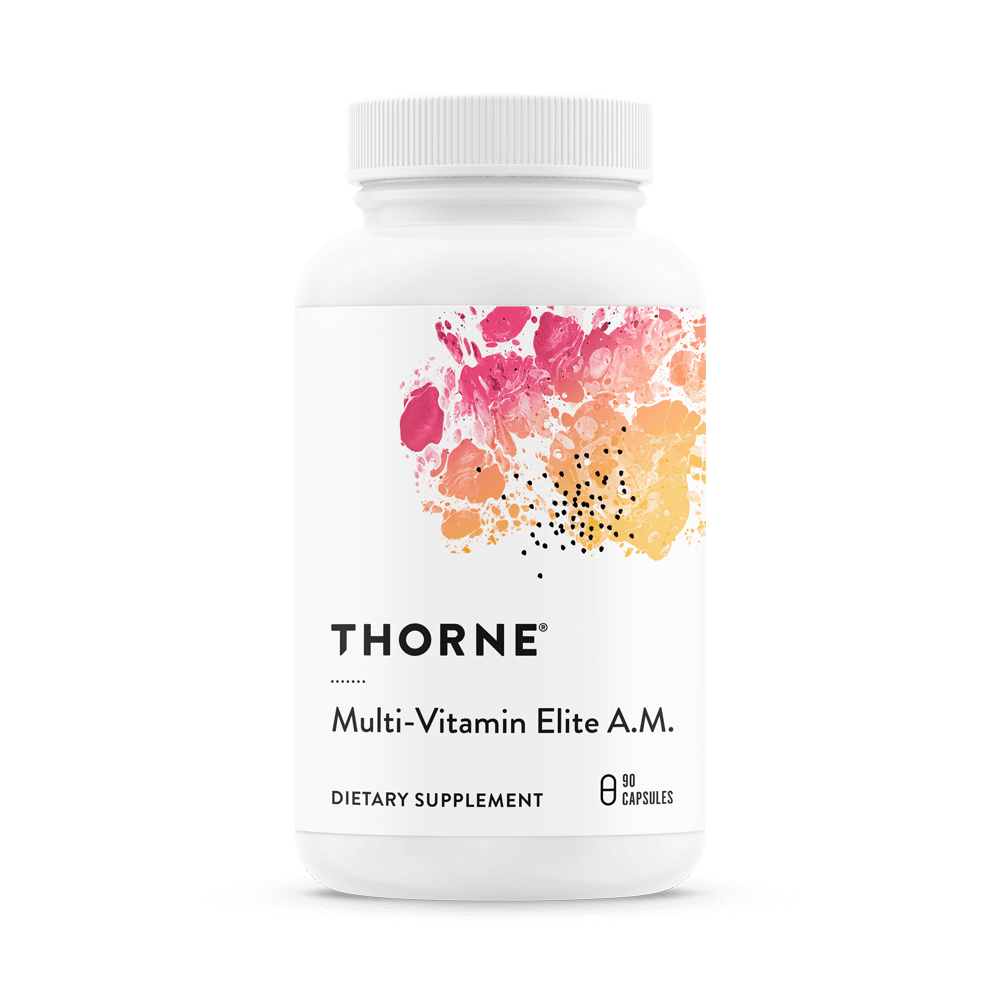
A comprehensive men's multi built on bioactive B vitamins — **Methylcobalamin** (B12), **Methylfolate** (B9), and **P5P** (B6) — so your body can use them directly without conversion. **Vitamin C** at 850mg and **Vitamin E** at 268mg (natural form) both land well within clinical ranges, and **Selenium** at 200mcg in a highly absorbed form rounds out strong antioxidant coverage.
**Magnesium** at 180mg as malate and **Zinc** at 15mg as bisglycinate chelate are both well-absorbed forms at meaningful doses. The label suggests 3–6 capsules daily — at 6 capsules, you'd double everything, which is worth considering for nutrients like **Vitamin D** that start at just 1,000 IU (the minimum clinical dose).
**Choline** at 35mg is well below the 100mg threshold where it starts contributing meaningfully, and **Lutein** at 0.144mg is a trace amount compared to the 10mg used in eye health studies. If either matters to you, you'd need a dedicated supplement.
BioStacks
Best for
Ingredients (22)
Vitamin E
100%Dose
268 mg
Target
50–268 mg
Form
Premium
Folate
100%Dose
1000 mcg
Target
400–800 mcg
Form
Premium
Manganese
100%Dose
6 mg
Target
1.8–5 mg
Form
Premium
Pantothenic Acid
100%Dose
413 mg
Target
50–500 mg
Form
Premium
Vitamin B6
100%Dose
10 mg
Target
1.3–25 mg
Form
Premium
Other Ingredients (2)
Calcium LaurateEmulsifier
Calcium salt of lauric acid used as a lubricant
HypromelloseCapsule
Plant-derived capsule material from cellulose
How to Take It
Take it anytime
No evidence a formula this broad works better at any particular hour. Take it with a meal containing fat — the vitamins A, D and E in it absorb poorly without one.
With a meal containing fat
Keep it away from high-oxalate foods like spinach
Space it a couple of hours from Iron
On the label
Suggested use: Take 3-6 capsules daily or as recommended by your health-care practitioner.
General guidance based on the ingredients, not a substitute for the label or your doctor.
Price Check
$56.00
Pricier than 87% of 798 multivitamins
Track this supplement in your stack
Get personalized insights, interactions, and coverage recommendations.
Get Started FreeSimilar Supplements
Sources & Scoring
Nutrient data (RDA, UL, and safety thresholds) sourced from the NIH Office of Dietary Supplements and the National Academies Dietary Reference Intakes (DRI).
This is not medical advice. Consult a healthcare provider before making changes to your supplement routine.
The score analyzes what's on the label: ingredient doses vs. studied ranges, chemical forms, evidence levels, and known interactions. It does not verify label accuracy or test for contaminants — for that, look for third-party certifications like USP or NSF.