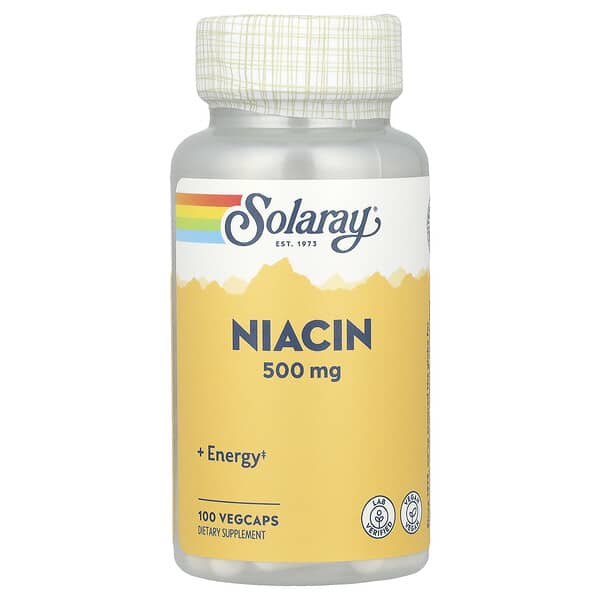
At 250mg, this **niacin** tablet is a pharmacologically active dose — enough to trigger the classic niacin flush within about 20 minutes, a warm, red tingling across your skin. That's the signature of nicotinic acid, the standard form in a plain niacin tablet like this. For energy and general vitamin B3 status, one tablet far exceeds what you need; the flush is harmless, just startling if you're not ready for it, and taking it with food eases it.
Where 250mg falls short is cholesterol: it sits below the 500–1,000mg range the lipid research used, so it's only a starting point if HDL and triglycerides are your target — and even those high-dose trials largely failed to show a real heart-disease benefit. Bottom line: more than enough B3 for energy, a low opening dose for cholesterol, and a guaranteed flush at this strength.
BioStacksAsk AI about this product
What it does
Vitamin B3
Form not confirmedGrade —
Helps convert food into cellular energy and supports normal metabolic reactions.
Ingredients (1)
Other ingredients
Rice FlourFiller
Rice-based ingredients carry risk of inorganic arsenic contamination (FDA and Consumer Reports). Rice accumulates arsenic from soil at higher rates than other grains. Used as a cheap filler — adds nothing beneficial.
Croscarmellose SodiumDisintegrant
Cross-linked cellulose derivative used as a superdisintegrant
Dicalcium PhosphateBinder
Calcium and phosphorus compound used as binder
Microcrystalline CelluloseBinder
Plant-derived cellulose used as a binder and filler in supplements
Stearic AcidLubricant
Saturated fatty acid used as tablet lubricant
Lab testing
How to take it
With food
On the label
As a dietary supplement, take one or two tablets daily.
Price check
$9.99
$0.10 / serving
Cheaper than 73% of 82 vitamin B3 supplements
Similar products
Sources & Scoring
Nutrient data (RDA, UL, and safety thresholds) sourced from the NIH Office of Dietary Supplements and the National Academies Dietary Reference Intakes (DRI).
This is not medical advice. Consult a healthcare provider before making changes to your supplement routine.
The score analyzes what's on the label: ingredient doses vs. studied ranges, chemical forms, evidence levels, and known interactions. It does not verify label accuracy or test for contaminants — for that, look for third-party certifications like USP or NSF.
Not medical advice. Consult your healthcare professional.