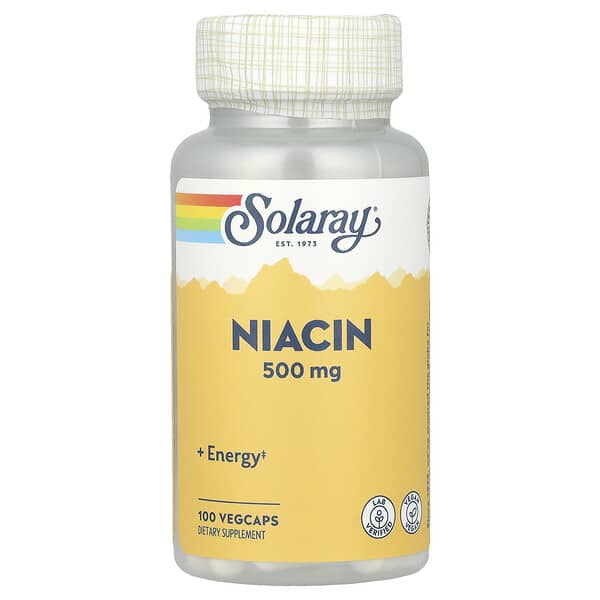
This 500mg **niacin** tablet is plain nicotinic acid — the one form of B3 that actually shifts your lipid profile, raising HDL and lowering triglycerides. At this strength it's working as cholesterol support rather than basic nutrition, and 500mg sits at the top of the studied range for that purpose.
Expect flushing. Nicotinic acid causes warmth and skin redness above roughly 30-50mg, so 500mg will likely trigger it at first — harmless but uncomfortable, and taking it with food helps.
One honest caveat: the two largest trials (AIM-HIGH and HPS2-THRIVE) found no drop in heart events when niacin was added to a statin, and flagged higher diabetes risk at gram-level doses. If you're on a statin or have liver concerns, talk to your doctor before starting.
BioStacks
Other Ingredients (12)
Rice FlourFiller
Rice-based ingredients carry risk of inorganic arsenic contamination (FDA and Consumer Reports). Rice accumulates arsenic from soil at higher rates than other grains. Used as a cheap filler — adds nothing beneficial.
MonoglyceridesEmulsifier
Glycerol monoesters of fatty acids used as emulsifiers and processing lubricants
Magnesium StearateLubricant
A salt of stearic acid used as a lubricant in tablet and capsule production
Oleic AcidEmollient
A monounsaturated fatty acid used as an emollient and penetration aid
Polyethylene Glycol (Coating)Coating
A polyether polymer used as a tablet coating and plasticizer
Silicon DioxideAnti-caking
Fine silica powder used to prevent clumping
Carnauba WaxCoating
Hard plant wax from the carnauba palm used to glaze gummies and tablets
Croscarmellose SodiumDisintegrant
Cross-linked cellulose derivative used as a superdisintegrant
How to Take It
Take it anytime
Take with food to blunt the flush at higher doses.
With food
On the label
As a dietary supplement, take one tablet daily.
General guidance based on the ingredients, not a substitute for the label or your doctor.
Price Check
$19.99
Pricier than 70% of 82 vitamin B3 supplements
Track this supplement in your stack
Get personalized insights, interactions, and coverage recommendations.
Get Started FreeSimilar Supplements
Sources & Scoring
Nutrient data (RDA, UL, and safety thresholds) sourced from the NIH Office of Dietary Supplements and the National Academies Dietary Reference Intakes (DRI).
This is not medical advice. Consult a healthcare provider before making changes to your supplement routine.
The score analyzes what's on the label: ingredient doses vs. studied ranges, chemical forms, evidence levels, and known interactions. It does not verify label accuracy or test for contaminants — for that, look for third-party certifications like USP or NSF.