BioStacks
Best for
Ingredients (1)
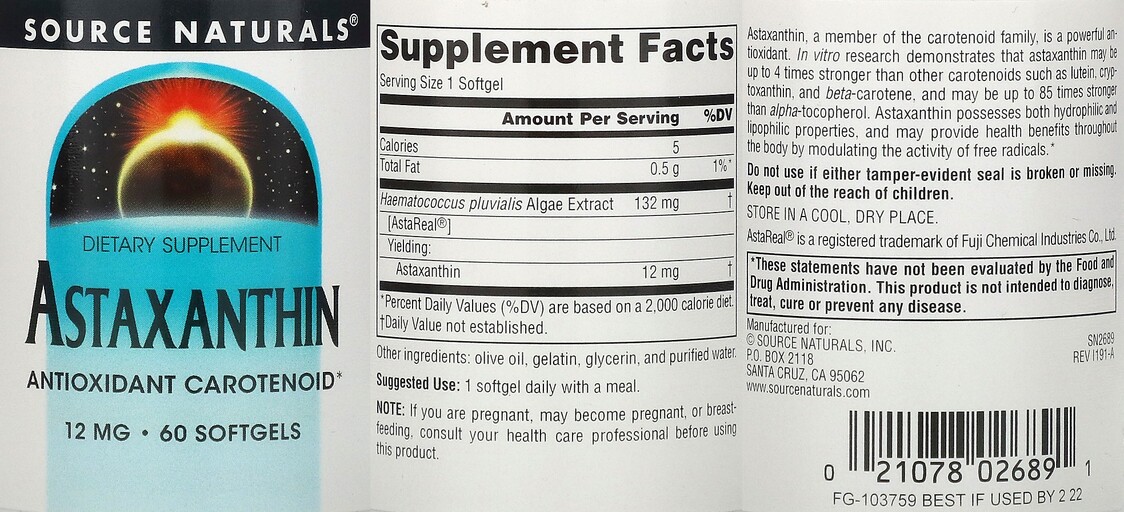
AstaPure Pure Astaxanthin
100%Dose
4 mg
Target
4–12 mg
Form
Not listed
Other Ingredients (7)
CarrageenanThickener
Can break down into poligeenan (a known inflammatory) under stomach acid conditions. Tobacman (2001, Environmental Health Perspectives) reviewed evidence linking carrageenan to intestinal inflammation and ulceration. Major food brands (Silk, Stonyfield) have voluntarily removed it. Used only as a thickener — provides no health benefit.
AstaxanthinFood
A reddish carotenoid antioxidant, typically sourced from Haematococcus pluvialis microalgae.
Capsule ShellCapsule
Generic capsule shell where the label does not specify the material. Common materials are hypromellose (HPMC) for vegetarian capsules and gelatin for traditional capsules — both are GRAS-listed and safe. Fish gelatin and pullulan variants also exist.
Mixed TocopherolsAntioxidant
Natural vitamin E used as preservative
Extra Virgin Olive OilCarrier
Cold-pressed olive oil used as a carrier and filler in softgel capsules for fat-soluble nutrients
GlycerinHumectant
Sweet-tasting liquid used in soft capsules and liquids
Sodium CarbonatesBuffering Agent
Alkaline buffering agents used to adjust pH and improve stability of supplement formulations
How to Take It
Take it anytime
Fat-soluble — take with a meal containing fat for better absorption. Time of day doesn't matter.
With a meal containing fat
On the label
Adults, take 1 capsule a day, with a meal. Do not exceed recommended daily intake.
General guidance based on the ingredients, not a substitute for the label or your doctor.
Price Check
No price yet
What 54 natural astaxanthin supplements cost
Track this supplement in your stack
Get personalized insights, interactions, and coverage recommendations.
Get Started FreeSimilar Supplements
Sources & Scoring
Nutrient data (RDA, UL, and safety thresholds) sourced from the NIH Office of Dietary Supplements and the National Academies Dietary Reference Intakes (DRI).
This is not medical advice. Consult a healthcare provider before making changes to your supplement routine.
The score analyzes what's on the label: ingredient doses vs. studied ranges, chemical forms, evidence levels, and known interactions. It does not verify label accuracy or test for contaminants — for that, look for third-party certifications like USP or NSF.