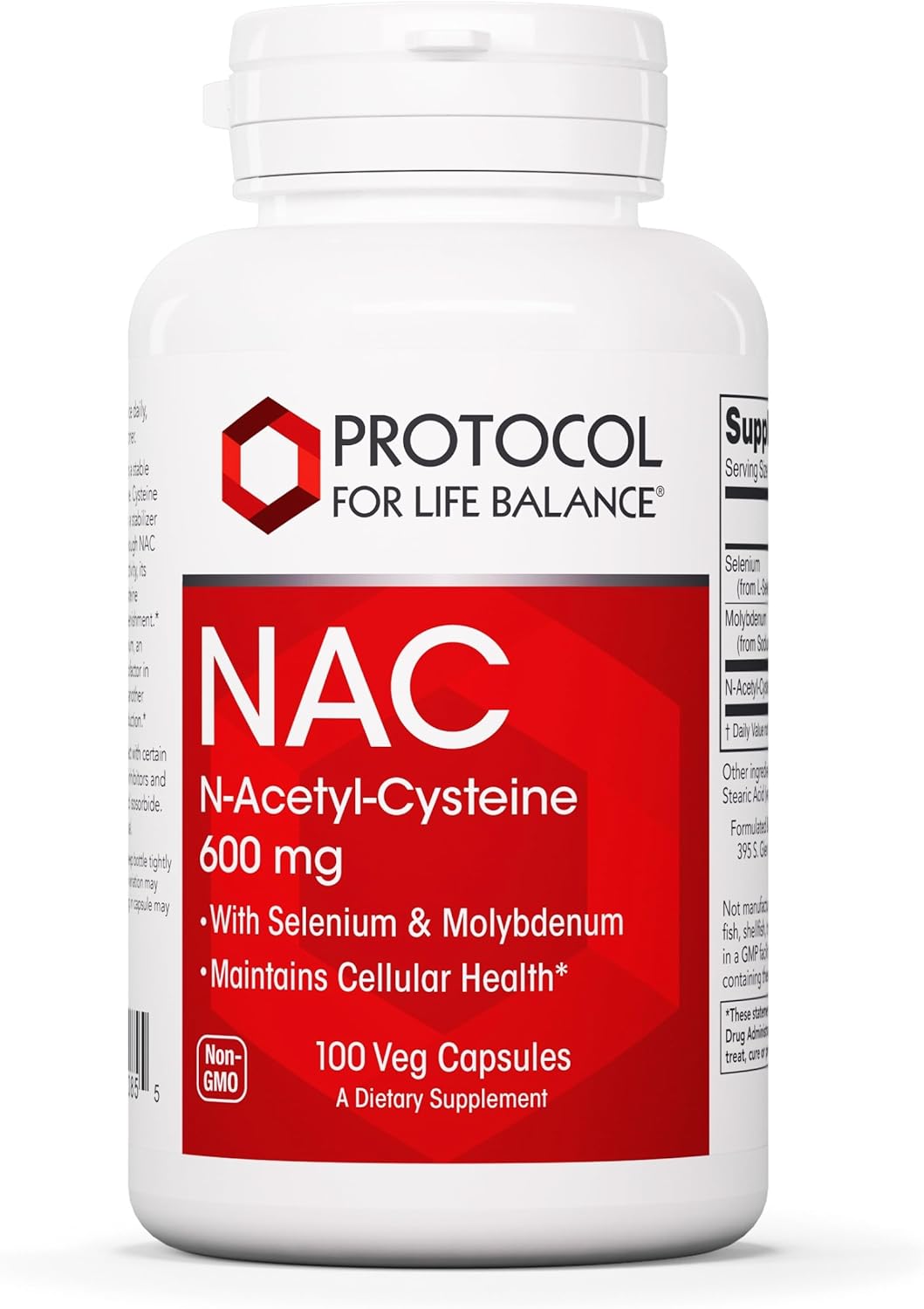
At 600mg of **N-Acetyl-L-Cysteine** per capsule, this sits right at the floor of the 600–1,200mg range studied for liver and antioxidant support — so one daily capsule delivers a full minimal effective dose. NAC is the most reliable way to raise glutathione, the antioxidant your body uses to detox the liver and shield cells from damage; swallowing glutathione itself mostly fails, but this precursor route actually works.
It's also the compound hospitals rely on as the antidote for acetaminophen overdose — the source of its liver-protective reputation — and it has solid clinical backing for thinning and clearing mucus. The small amounts of selenium and molybdenum here are supporting co-factors, not headline ingredients.
Take it on an empty stomach for best absorption, even though the label allows it with food. To reach the upper clinical range, you'd add a second capsule.
BioStacksAsk AI about this product
What it does
A combination of 3 label ingredients.
NAC
Form not confirmedGrade —
Label lists N-Acetyl-L-Cysteine (600 mg). Benefit information is limited.
Selenium
selenomethioninePremium
Supports normal thyroid hormone metabolism and enzymes that protect cells from oxidative damage.
Ingredients (3)
Other ingredients
Magnesium StearateLubricant
A salt of stearic acid used as a lubricant in tablet and capsule production
Silicon DioxideAnti-caking
Fine silica powder used to prevent clumping
Dicalcium PhosphateBinder
Calcium and phosphorus compound used as binder
Gum AcaciaBinder
Natural plant gum (acacia) used as a binder, stabilizer, and emulsifier in foods and supplements
Microcrystalline CelluloseBinder
Plant-derived cellulose used as a binder and filler in supplements
Stearic AcidLubricant
Saturated fatty acid used as tablet lubricant
Lab testing
How to take it
With food
NAC does better on an empty stomach, but something else in this bottle needs food. Taking the whole product with a meal is the better trade — an upset stomach is why most people stop.
On the label
Suggested use: Take 1 capsule daily with or without food, or as recommended by a qualified healthcare professional.
Price check
$16.97
Cheaper than 75% of 77 NAC supplements
Similar products

Sources & Scoring
Nutrient data (RDA, UL, and safety thresholds) sourced from the NIH Office of Dietary Supplements and the National Academies Dietary Reference Intakes (DRI).
This is not medical advice. Consult a healthcare provider before making changes to your supplement routine.
The score analyzes what's on the label: ingredient doses vs. studied ranges, chemical forms, evidence levels, and known interactions. It does not verify label accuracy or test for contaminants — for that, look for third-party certifications like USP or NSF.
Not medical advice. Consult your healthcare professional.