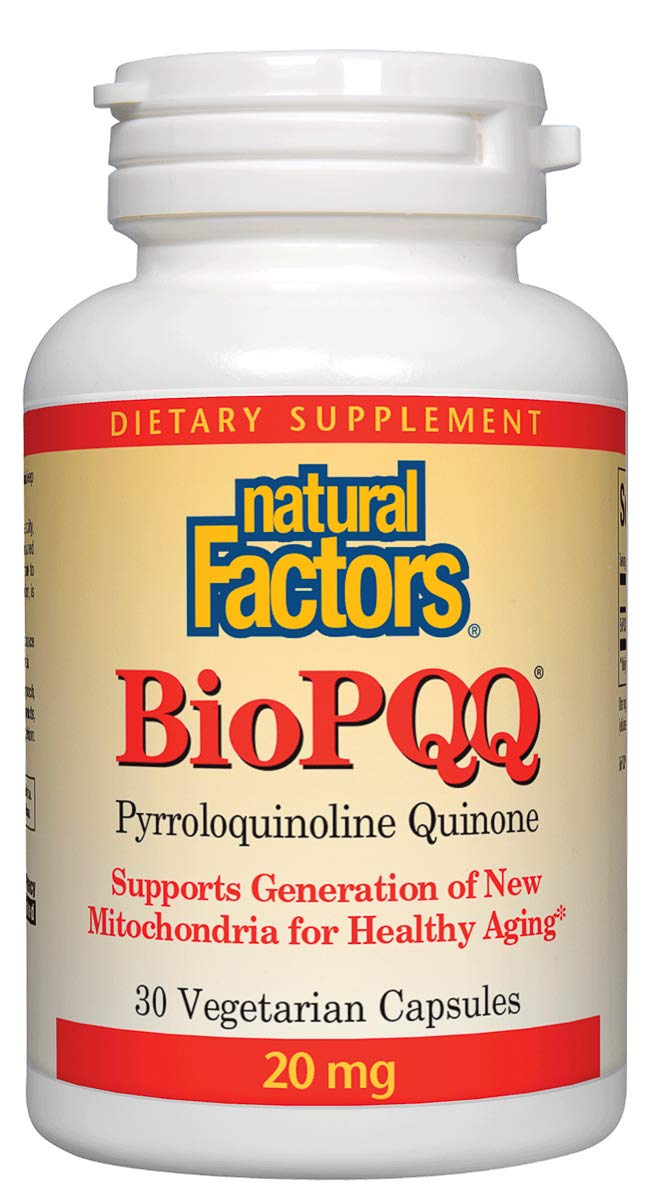
If you're after cellular energy and mitochondrial support, this delivers **PQQ** at 10mg per capsule — right at the floor of the 10–20mg range used in human studies. The label's once-or-twice-daily directions matter here: one capsule puts you at the studied minimum, while two gets you to 20mg, the dose most trials actually used.
PQQ is mechanistically interesting — it's thought to help your body build new mitochondria, the cellular components that produce energy. But the human evidence is still preliminary: a handful of small, short trials on fatigue, sleep, and cognition, the largest with just 17 people and no large RCTs yet. Treat the energy and focus claims as emerging, not established.
PQQ is often paired with CoQ10, since the two target mitochondria from different angles. On its own at this dose, you're getting a reasonable entry point into an ingredient that's promising but not yet proven.
BioStacks
Best for
Ingredients (1)
PQQ (Pyrroloquinoline Quinone) Disodium Salt
100%Dose
10 mg
Target
10–20 mg
Form
—
Other Ingredients (4)
Silicon DioxideAnti-caking
Fine silica powder used to prevent clumping
Microcrystalline CelluloseBinder
Plant-derived cellulose used as a binder and filler in supplements
Stearic AcidLubricant
Saturated fatty acid used as tablet lubricant
Microcrystalline CelluloseBinder
Plant-derived cellulose used as a binder and filler in supplements
How to Take It
Take it anytime
Timing doesn't matter for this one — taking it consistently does.
With or without food
On the label
Read the entire label and follow the directions carefully prior to use. Directions: Take one (1) capsule, once or twice daily, or as recommended by a healthcare practitioner.
General guidance based on the ingredients, not a substitute for the label or your doctor.
Price Check
No price yet
What 31 PQQ supplements cost
Track this supplement in your stack
Get personalized insights, interactions, and coverage recommendations.
Get Started FreeSimilar Supplements
Sources & Scoring
Nutrient data (RDA, UL, and safety thresholds) sourced from the NIH Office of Dietary Supplements and the National Academies Dietary Reference Intakes (DRI).
This is not medical advice. Consult a healthcare provider before making changes to your supplement routine.
The score analyzes what's on the label: ingredient doses vs. studied ranges, chemical forms, evidence levels, and known interactions. It does not verify label accuracy or test for contaminants — for that, look for third-party certifications like USP or NSF.