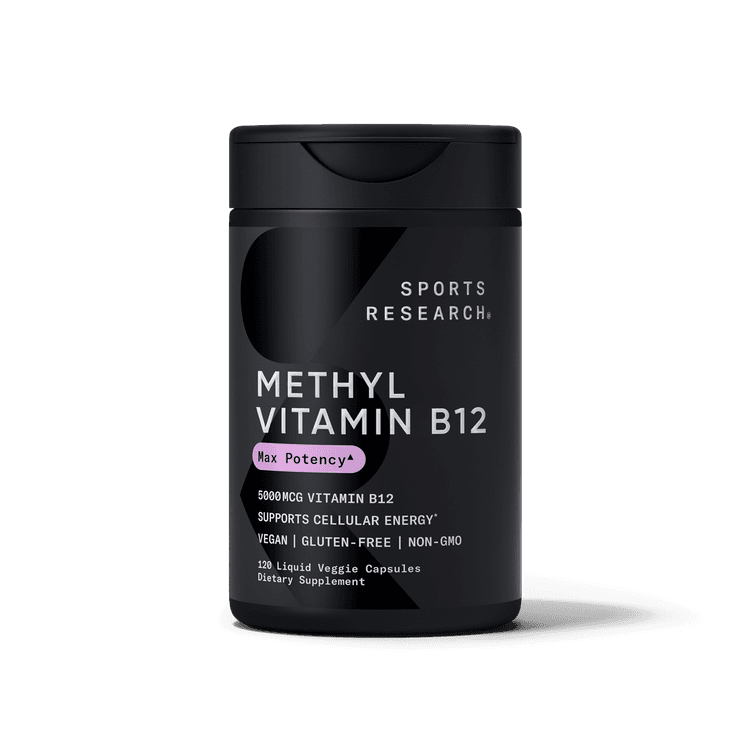
This B12 delivers a full 5,000mcg of **methylcobalamin** for energy and nerve support — the active, ready-to-use form your body absorbs directly, no conversion needed. That sits at the top of the typical supplemental range and far above the 2.4mcg daily requirement; because B12 absorbs poorly, the high dose pushes enough through to support red blood cell formation too.
It's built for people who genuinely need it — vegans, vegetarians, adults over 50, and anyone with absorption issues, where deficiency is common. The chewable, dissolve-in-mouth format lets some B12 absorb through the mouth, bypassing the gut absorption that declines with age.
B12 is water-soluble with no upper limit, so your body uses what it needs and clears the rest in urine — this dose corrects a shortfall but won't do more if your levels are already normal. It's safe, low-risk insurance if you're at risk of running low.
BioStacks
Best for
Ingredients (1)
Vitamin B12
100%Dose
5000 mcg
Target
250–5000 mcg
Form
Premium
Other Ingredients (4)
LactoseFiller
A milk-derived sugar used as a filler and binder in tablets and capsules
Magnesium StearateLubricant
A salt of stearic acid used as a lubricant in tablet and capsule production
Croscarmellose SodiumDisintegrant
Cross-linked cellulose derivative used as a superdisintegrant
Microcrystalline CelluloseBinder
Plant-derived cellulose used as a binder and filler in supplements
How to Take It
Best taken in the morning
Many people prefer it earlier in the day; there's no evidence timing changes anything. Absorption is fine with or without food.
With or without food
On the label
Chew or dissolve 1 tablet per day in the mouth before swallowing or as directed by a health professional.
General guidance based on the ingredients, not a substitute for the label or your doctor.
Price Check
$15.37
Near the median of 235 vitamin B12 supplements
Track this supplement in your stack
Get personalized insights, interactions, and coverage recommendations.
Get Started FreeSimilar Supplements
Sources & Scoring
Nutrient data (RDA, UL, and safety thresholds) sourced from the NIH Office of Dietary Supplements and the National Academies Dietary Reference Intakes (DRI).
This is not medical advice. Consult a healthcare provider before making changes to your supplement routine.
The score analyzes what's on the label: ingredient doses vs. studied ranges, chemical forms, evidence levels, and known interactions. It does not verify label accuracy or test for contaminants — for that, look for third-party certifications like USP or NSF.