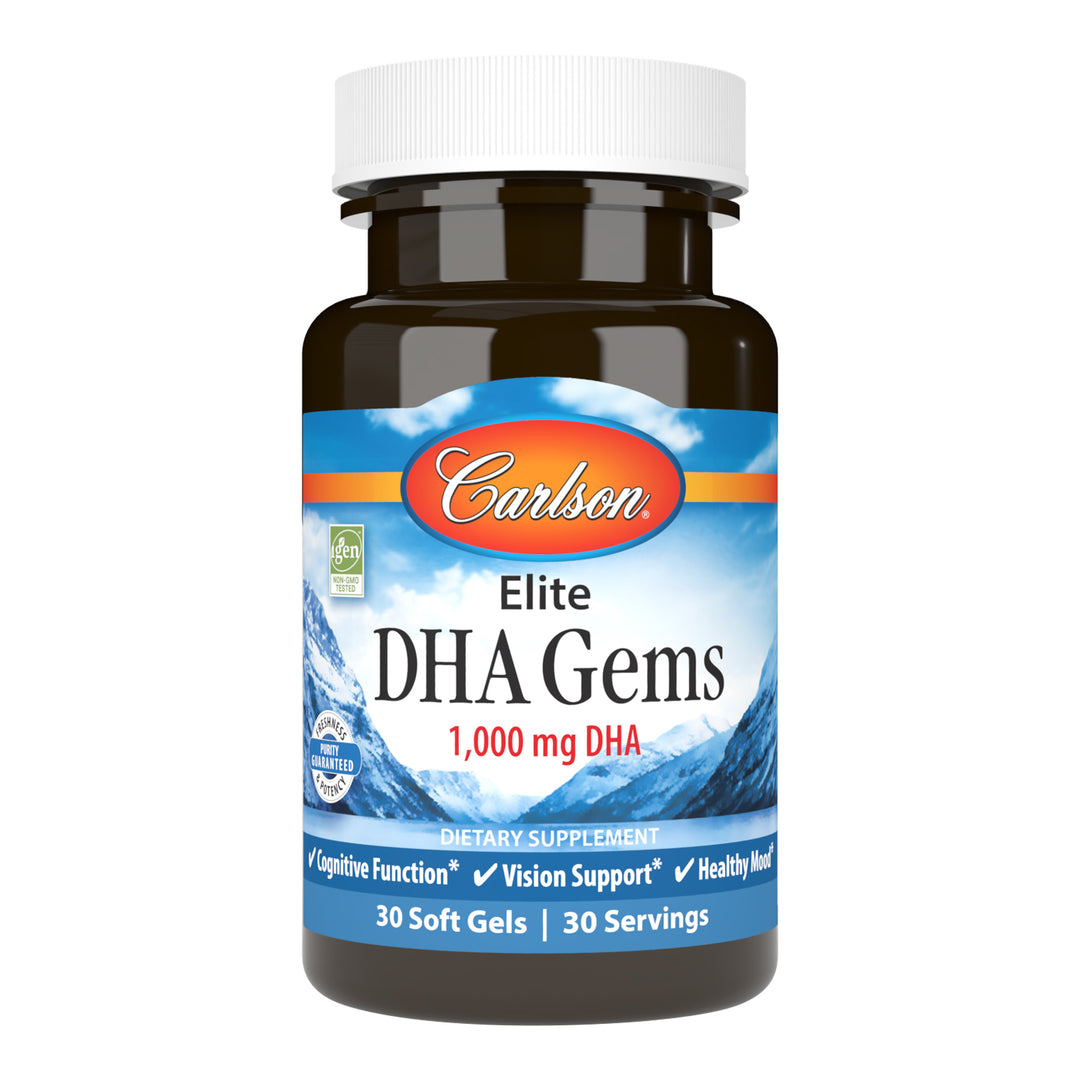
This NOW DHA-1000 delivers a full 1,000mg of **DHA** in a single softgel — the very top of the 250–1,000mg clinical range for brain and cognitive support. DHA is the primary structural fat in your brain (about 97% of its omega-3 content) and the dominant omega-3 in your retina, so this dose covers both cognition and vision at the level studies actually use. One softgel a day with a meal gets you there, with no pill burden.
Worth knowing: this is a DHA concentrate, not a balanced fish oil. The label breaks out 1,000mg of DHA within 1,300mg of fish oil but doesn't list EPA — and heart and triglyceride benefits track the combined EPA+DHA dose. That makes this softgel built for your brain and eyes; for cardiovascular goals, the EPA side isn't quantified on the label.
BioStacks
Nutrition
Calories, macros & sodium.
- Calories15 Calorie(s)
- Total Fat1.5 Gram(s)
Other Ingredients (4)
GelatinCapsule
Protein derived from collagen, used in traditional capsule shells
Mixed TocopherolsAntioxidant
Natural vitamin E used as preservative
GlycerinHumectant
Sweet-tasting liquid used in soft capsules and liquids
Purified WaterSolvent
Water meeting USP specifications used as solvent/vehicle in gummies and liquids
How to Take It
Take it anytime
Take with a meal — absorption improves with dietary fat and it prevents fishy burps.
With food
On the label
Suggested Usage: Take 1 softgel daily with a meal.
General guidance based on the ingredients, not a substitute for the label or your doctor.
Price Check
No price yet
What 382 omega-3 supplements cost
Track this supplement in your stack
Get personalized insights, interactions, and coverage recommendations.
Get Started FreeSimilar Supplements
Sources & Scoring
Nutrient data (RDA, UL, and safety thresholds) sourced from the NIH Office of Dietary Supplements and the National Academies Dietary Reference Intakes (DRI).
This is not medical advice. Consult a healthcare provider before making changes to your supplement routine.
The score analyzes what's on the label: ingredient doses vs. studied ranges, chemical forms, evidence levels, and known interactions. It does not verify label accuracy or test for contaminants — for that, look for third-party certifications like USP or NSF.