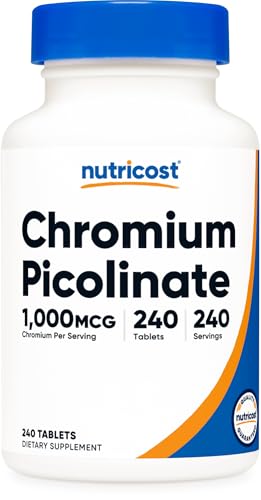
If you're looking for blood sugar and insulin sensitivity support, this hits the top of the clinical range. At the full two-capsule serving, you're getting 1,000mcg of **Chromium** in the picolinate form — the most studied and best-absorbed version of this mineral, right at the ceiling of the 200–1,000mcg range used in research on fasting glucose and metabolic markers.
The picolinate form (branded as Chromax) carries the bulk of the positive clinical data for chromium supplementation. The two-capsule serving also gives you flexibility to take just one capsule (500mcg) if you prefer a moderate dose that still lands solidly within the studied range.
The caveat: chromium's clinical evidence is moderate overall, with mixed results across studies. Benefits tend to be most meaningful if you already have blood sugar concerns — if your metabolism is healthy, the effect on you may be minimal. The label also warns diabetics and hypoglycemics to use this under physician supervision, which is worth taking seriously at this dose.
BioStacks
Best for
Ingredients (1)
Chromium
100%Dose
1000 mcg
Target
200–1000 mcg
Form
Premium
Other Ingredients (3)
Magnesium StearateLubricant
A salt of stearic acid used as a lubricant in tablet and capsule production
Microcrystalline CelluloseBinder
Plant-derived cellulose used as a binder and filler in supplements
Microcrystalline CelluloseBinder
Plant-derived cellulose used as a binder and filler in supplements
How to Take It
Take it anytime
Take with meals — its glucose effects act on the food you're eating.
With food
On the label
Suggested use: As a dietary supplement for adults, take two (2) vegetable capsules daily, preferably at mealtime, or as directed by a healthcare practitioner.
General guidance based on the ingredients, not a substitute for the label or your doctor.
Price Check
$7.34
Cheaper than 85% of 72 chromium supplements
Track this supplement in your stack
Get personalized insights, interactions, and coverage recommendations.
Get Started FreeSimilar Supplements
Sources & Scoring
Nutrient data (RDA, UL, and safety thresholds) sourced from the NIH Office of Dietary Supplements and the National Academies Dietary Reference Intakes (DRI).
This is not medical advice. Consult a healthcare provider before making changes to your supplement routine.
The score analyzes what's on the label: ingredient doses vs. studied ranges, chemical forms, evidence levels, and known interactions. It does not verify label accuracy or test for contaminants — for that, look for third-party certifications like USP or NSF.