BioStacks
Other Ingredients (7)
Caramel ColorColor
Class III and IV caramel colors contain 4-methylimidazole (4-MEI), classified by IARC as Group 2B (possibly carcinogenic to humans) in 2011 (Monograph Vol. 101). California Prop 65 lists 4-MEI as a known carcinogen; products delivering >29 mcg/day require a cancer warning label. NTP TR-535 (2007) found 4-MEI caused lung tumors in mice. Major cola brands (Coca-Cola, Pepsi) voluntarily reformulated 2012-2014 to reduce 4-MEI below California thresholds. Because labels never specify Class I (sugar + heat only, safer) vs Class III/IV (ammonia-process, contains 4-MEI), consumers cannot verify which they're consuming. Combined with the additive's purely cosmetic purpose, the risk:benefit ratio is unfavorable for any supplement.
Titanium DioxideColorant
Banned in the EU (2022) over concerns that its ultra-fine particles may damage DNA in gut cells. Still allowed in the US. Used only for white coloring — provides no health benefit.
Silicon DioxideAnti-caking
Fine silica powder used to prevent clumping
Magnesium StearateLubricant
A salt of stearic acid used as a lubricant in tablet and capsule production
Microcrystalline CelluloseBinder
Plant-derived cellulose used as a binder and filler in supplements
Microcrystalline CelluloseBinder
Plant-derived cellulose used as a binder and filler in supplements
GlycerinHumectant
Sweet-tasting liquid used in soft capsules and liquids
How to Take It
Take it anytime
Timing doesn't matter for this one — taking it consistently does.
With or without food
On the label
As a dietary supplement for adults, take one (1) tablet up to two times daily, preferably with a meal or as directed by a healthcare practitioner.
General guidance based on the ingredients, not a substitute for the label or your doctor.
Price Check
$34.49
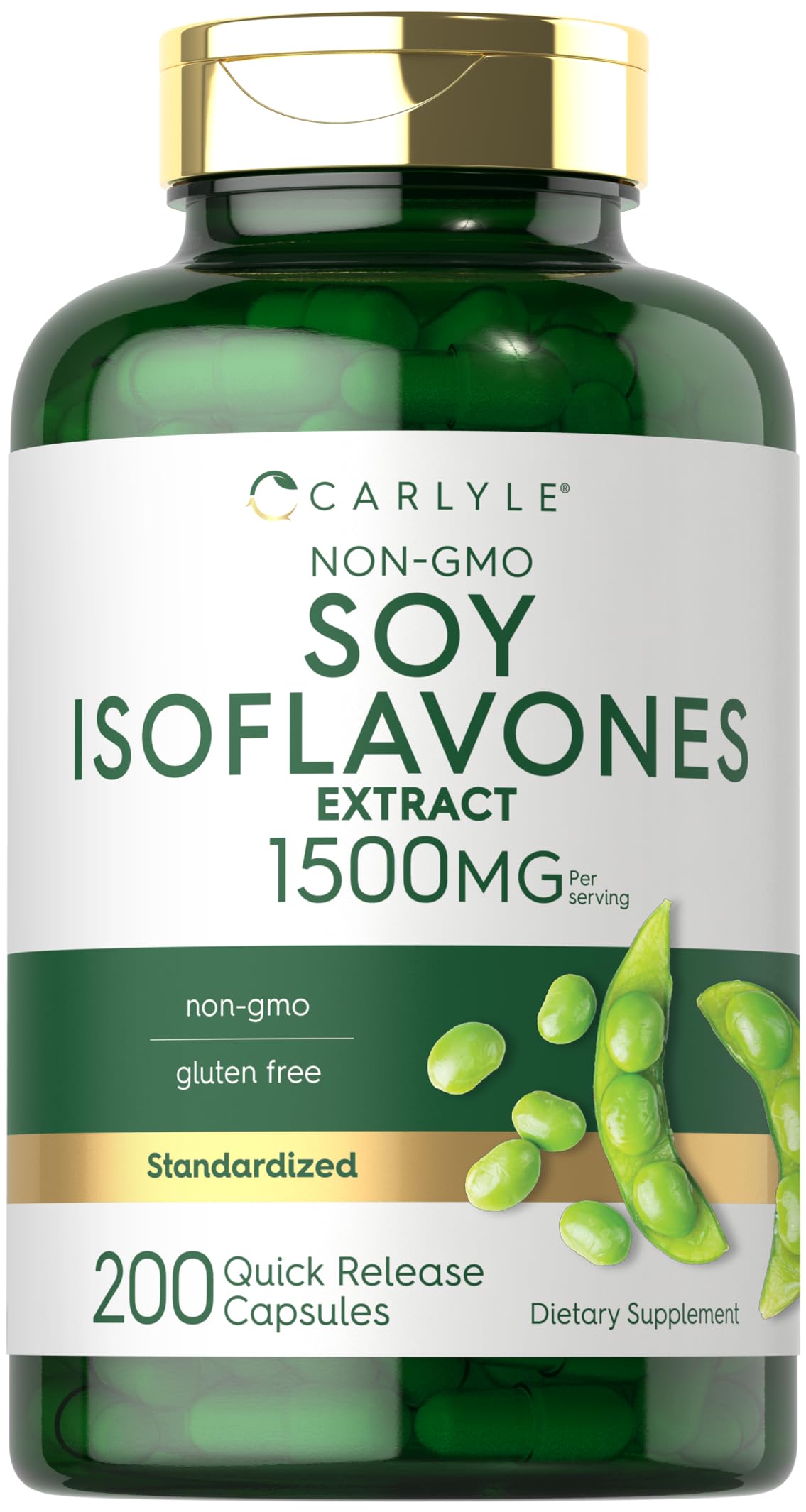
Pricier than 85% of 12 soy isoflavone supplements
Track this supplement in your stack
Get personalized insights, interactions, and coverage recommendations.
Get Started FreeSimilar Supplements
Sources & Scoring
Nutrient data (RDA, UL, and safety thresholds) sourced from the NIH Office of Dietary Supplements and the National Academies Dietary Reference Intakes (DRI).
This is not medical advice. Consult a healthcare provider before making changes to your supplement routine.
The score analyzes what's on the label: ingredient doses vs. studied ranges, chemical forms, evidence levels, and known interactions. It does not verify label accuracy or test for contaminants — for that, look for third-party certifications like USP or NSF.