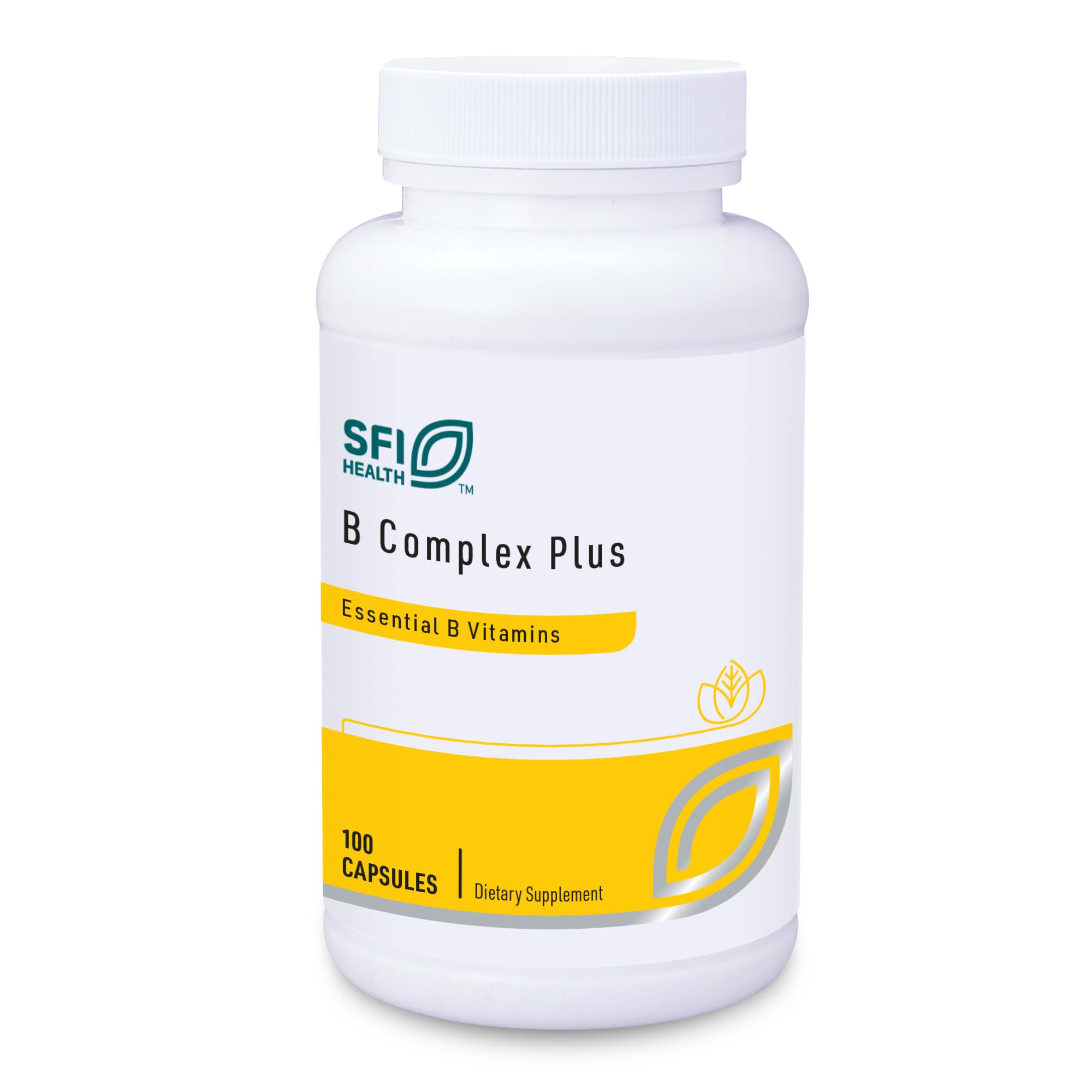
This is a high-potency B-complex aimed at energy and everyday metabolic support, and it delivers full doses across the core B vitamins. **Folate** comes as L-methylfolate at 400mcg, the active form your body uses directly, which matters if you carry an MTHFR gene variant that makes processing standard folic acid harder. Thiamine, riboflavin, and pantothenic acid all land near the top of their typical ranges, so you're well-covered for converting food into usable energy.
**Vitamin B12** is dosed at 300mcg as methylcobalamin, a form your body uses without any conversion step, supporting energy and nerve function. Most of the other B vitamins also use their bioactive forms, so absorption isn't a bottleneck here. Biotin sits at 1,000mcg, the entry point of the supplement range and plenty for general support.
One thing to watch: **Vitamin B6** is dosed at 100mg, right at the tolerable upper limit. That's fine for a short stretch, but taking high-dose B6 every day for many months has been linked to nerve tingling and numbness, so you're better off using it as a targeted boost than an open-ended daily habit. The 100mg of inositol is also far below the 2,000mg-plus used in research, so don't count on it for mood or hormonal effects.
BioStacksAsk AI about this product
What it does
A combination of 11 label ingredients.
Vitamin B9
Mixed formsGrade —
Supports DNA production, normal cell division and red blood cell formation.
Vitamin B1
thiamine hclBudget
Helps the body release energy from food and supports normal cell function.
Ingredients (11)
Other ingredients
Silicon DioxideAnti-caking
Fine silica powder used to prevent clumping
Microcrystalline CelluloseBinder
Plant-derived cellulose used as a binder and filler in supplements
Microcrystalline CelluloseBinder
Plant-derived cellulose used as a binder and filler in supplements
Stearic AcidLubricant
Saturated fatty acid used as tablet lubricant
Lab testing
How to take it
With food
On the label
Take 2 capsules daily with or without food.
Price check
$28.85
Near the median of 239 energy supplements
Similar products
Sources & Scoring
Nutrient data (RDA, UL, and safety thresholds) sourced from the NIH Office of Dietary Supplements and the National Academies Dietary Reference Intakes (DRI).
This is not medical advice. Consult a healthcare provider before making changes to your supplement routine.
The score analyzes what's on the label: ingredient doses vs. studied ranges, chemical forms, evidence levels, and known interactions. It does not verify label accuracy or test for contaminants — for that, look for third-party certifications like USP or NSF.
Not medical advice. Consult your healthcare professional.