BioStacks
Best for
Ingredients (26)
Betacarotene
100%Dose
1500 mcg
Target
700–1500 mcg
Form
—
Vitamin B6
100%Dose
10 mg
Target
1.3–25 mg
Form
—
Pantothenic Acid
100%Dose
90 mg
Target
50–500 mg
Form
—
Niacin
100%Dose
36 mg
Target
25–500 mg
Form
—
Silica
100%Dose
129 mg
Target
5–30 mg
Form
—
Other Ingredients (6)
MaltodextrinBinder
Spikes blood sugar faster than table sugar (glycemic index 85–105). Research links it to gut bacteria changes that may promote intestinal inflammation (Nickerson et al. 2015). Used as a cheap filler — adds nothing beneficial.
Coating (unspecified)Coating
Generic tablet coating declaration where the label does not itemize the coating's components; modern aqueous film coatings are typically cellulose-based (HPMC) with a plasticizer
Microcrystalline CelluloseBinder
Plant-derived cellulose used as a binder and filler in supplements
PotassiumMineral
Essential mineral naturally present in many plant-based supplement ingredients
Mixed TocopherolsAntioxidant
Natural vitamin E used as preservative
Chromium Chloride
Not reviewed yet
How to Take It
Take it anytime
No evidence a formula this broad works better at any particular hour. Take it with a meal containing fat — the vitamins A, D and E in it absorb poorly without one.
With a meal containing fat
Keep it away from coffee, tea and dairy
Space it a couple of hours from Calcium and Green Tea Leaf Extract
On the label
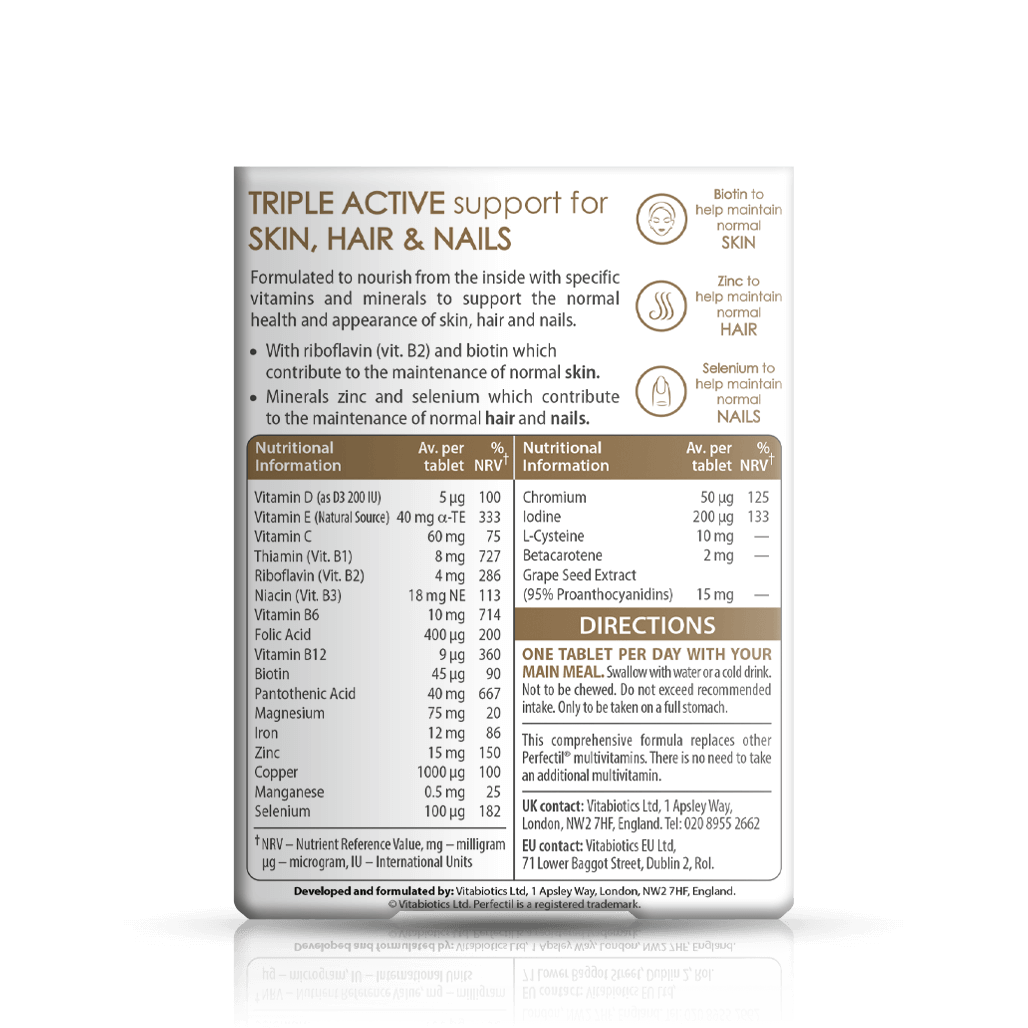
TAKE TWO TABLETS PER DAY WITH YOUR MAIN MEAL. Swallow each with water or a cold drink. Not to be chewed. Do not exceed the recommended intake. To be taken on a full stomach. This comprehensive formula replaces other Hairfollic multivitamins. There is no need to take an additional multivitamin. Hairfollic Her is available in a 30 tablet pack (15 days supply) No artificial colours No preservatives No yeast Hairfollic is not tested on animals
General guidance based on the ingredients, not a substitute for the label or your doctor.
Price Check
£18.95≈ $24.07
Near the median of 798 multivitamins
Track this supplement in your stack
Get personalized insights, interactions, and coverage recommendations.
Get Started FreeSimilar Supplements
Sources & Scoring
Nutrient data (RDA, UL, and safety thresholds) sourced from the NIH Office of Dietary Supplements and the National Academies Dietary Reference Intakes (DRI).
This is not medical advice. Consult a healthcare provider before making changes to your supplement routine.
The score analyzes what's on the label: ingredient doses vs. studied ranges, chemical forms, evidence levels, and known interactions. It does not verify label accuracy or test for contaminants — for that, look for third-party certifications like USP or NSF.