BioStacks
Best for
Ingredients (2)
Ademetionine 1,4-butanedisulfonate
100%Dose
800 mg
Target
800–1600 mg
Form
Premium
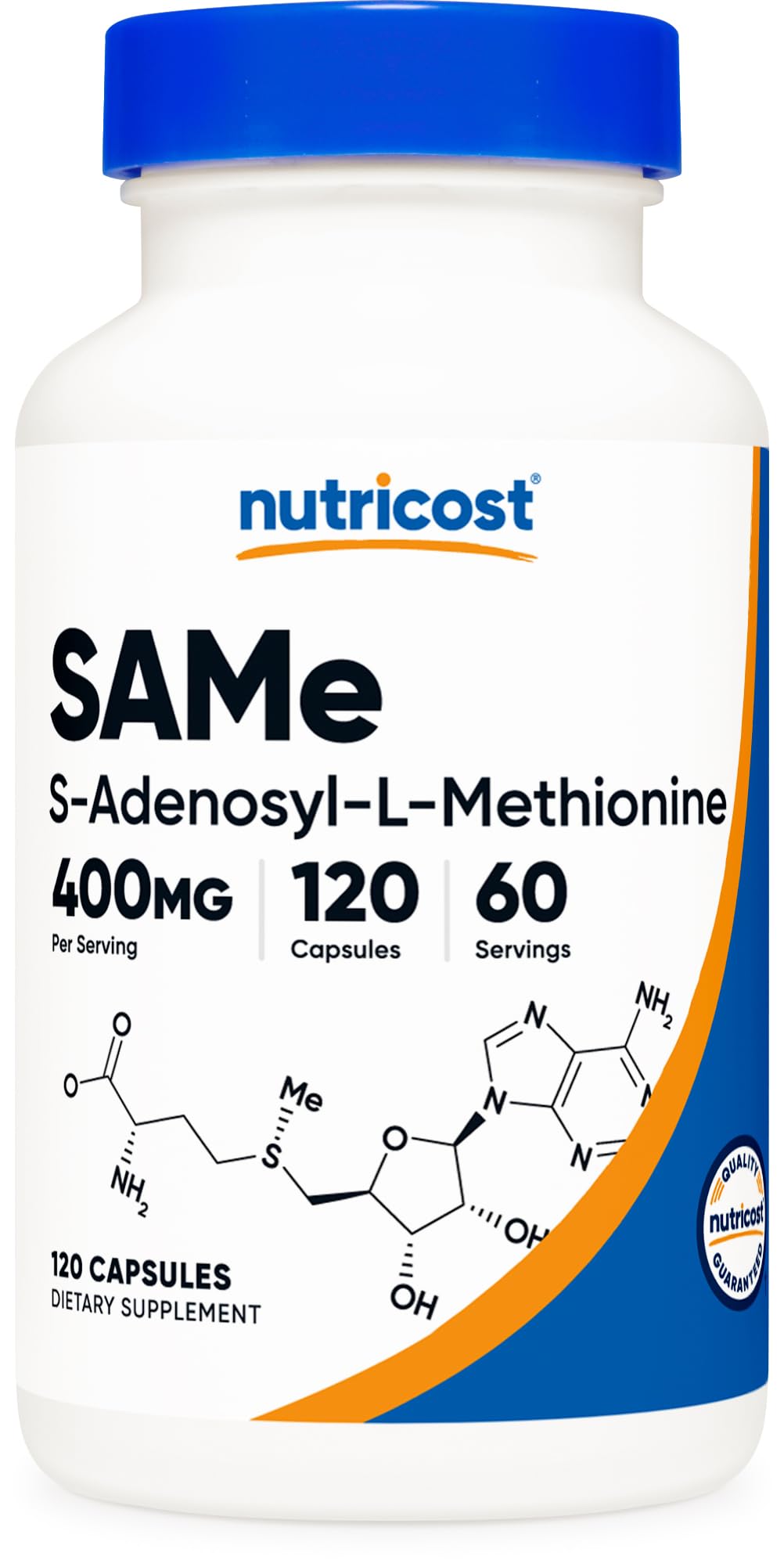
SAMe
50%Dose
400 mg
Target
800–1600 mg
Form
Not listed
Other Ingredients (11)
Titanium DioxideColorant
Banned in the EU (2022) over concerns that its ultra-fine particles may damage DNA in gut cells. Still allowed in the US. Used only for white coloring — provides no health benefit.
Polyethylene Glycol (Coating)Coating
A polyether polymer used as a tablet coating and plasticizer
Silicon DioxideAnti-caking
Fine silica powder used to prevent clumping
Ascorbic AcidAntioxidant
Vitamin C used as an antioxidant preservative in supplements to prevent oxidation
Ascorbyl PalmitateAntioxidant
Fat-soluble form of vitamin C used as preservative
Citric AcidAcidulant
Natural acid derived from citrus fruits
Croscarmellose SodiumDisintegrant
Cross-linked cellulose derivative used as a superdisintegrant
HypromelloseCapsule
Plant-derived capsule material from cellulose
How to Take It
Best taken in the morning
Take in the morning on an empty stomach — it can be activating and may disturb sleep later in the day.
On an empty stomach
Space it a couple of hours from 5-HTP
On the label
Take 1 tablet daily with or without food. Best when taken as directed by a qualified healthcare professional.
Do not combine with St. John's Wort
Each of these raises serotonin activity on top of St. John's Wort, and together they can trigger serotonin syndrome — agitation, rapid heartbeat, raised blood pressure. Not without medical supervision.
General guidance based on the ingredients, not a substitute for the label or your doctor.
Price Check
$64.03
Near the median of 24 SAMe supplements
Track this supplement in your stack
Get personalized insights, interactions, and coverage recommendations.
Get Started FreeSimilar Supplements
Sources & Scoring
Nutrient data (RDA, UL, and safety thresholds) sourced from the NIH Office of Dietary Supplements and the National Academies Dietary Reference Intakes (DRI).
This is not medical advice. Consult a healthcare provider before making changes to your supplement routine.
The score analyzes what's on the label: ingredient doses vs. studied ranges, chemical forms, evidence levels, and known interactions. It does not verify label accuracy or test for contaminants — for that, look for third-party certifications like USP or NSF.