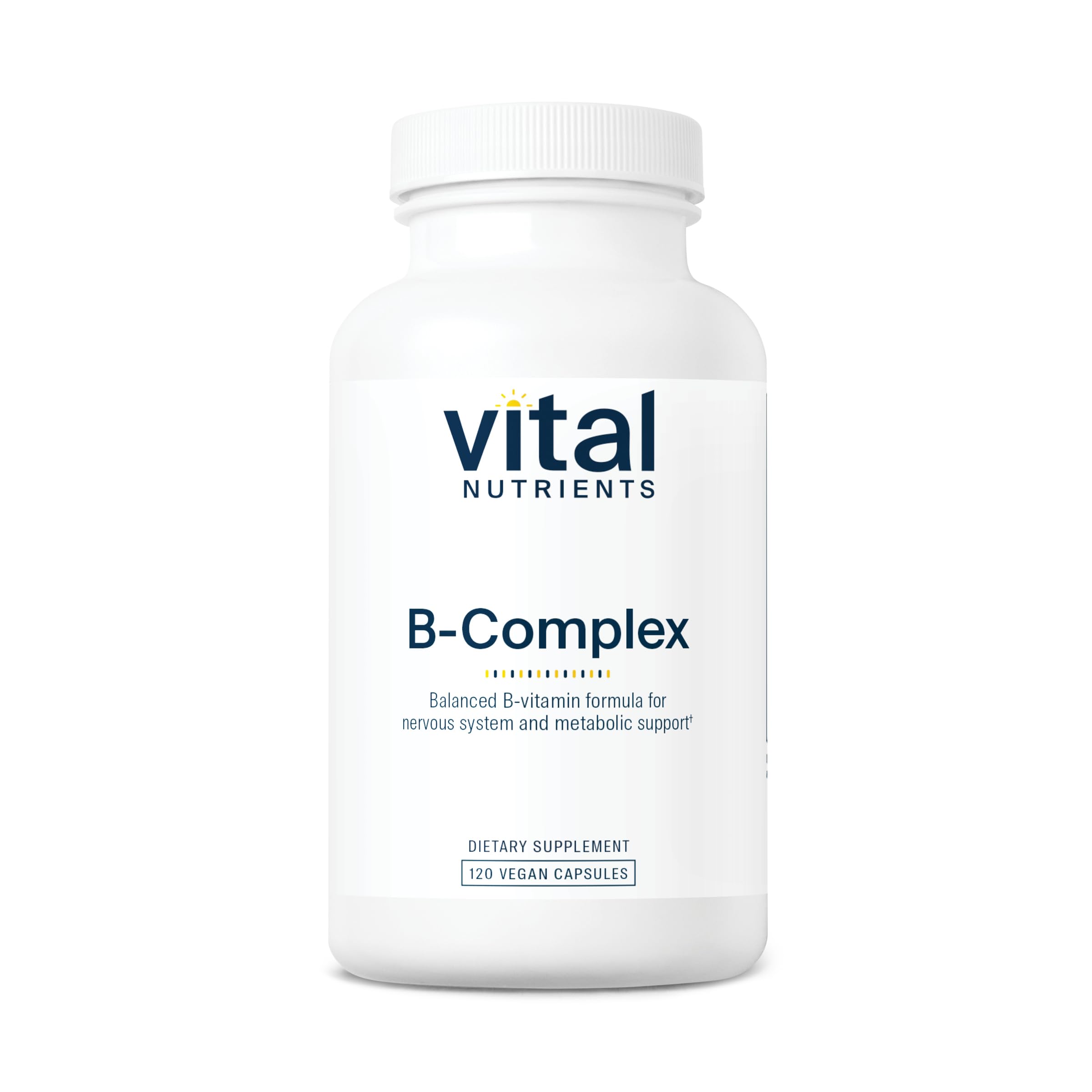
For your energy and metabolic support, this B complex delivers solid doses, with most B vitamins landing within the clinical range. **Vitamin B6** at 34mg uses a blend that includes the active P5P form your body can use directly, and **Pantothenic Acid** at 100mg sits right at the top of its typical range. **Folate** at 400mcg meets the RDA, and **Riboflavin** at 26mg is well within the supplemental sweet spot.
The form choices are a mix. What this means for you: B6 and B2 include their active, body-ready forms alongside standard versions, which is a meaningful upgrade for absorption. However, **Thiamine** at 24mg uses hydrochloride — a budget form with lower bioavailability than benfotiamine.
The notable gap: there's no B12 in this formula. If you're relying on this as your only B complex, you'll need a separate B12 supplement, especially if you follow a plant-based diet.
BioStacks
Best for
Ingredients (7)
Pantothenic Acid
100%Dose
100 mg
Target
50–500 mg
Form
Premium
Vitamin B6
100%Dose
34 mg
Target
25–100 mg
Form
Premium
Vitamin B3
100%Dose
32 mg
Target
25–500 mg
Form
Standard
Vitamin B1
96%Dose
24 mg
Target
25–100 mg
Form
Premium
Vitamin B2
100%Dose
26 mg
Target
25–100 mg
Form
Standard
Other Ingredients (3)
HypromelloseCapsule
Plant-derived capsule material from cellulose
LeucineFlow Aid
Branched-chain amino acid used as a processing aid
Microcrystalline CelluloseBinder
Plant-derived cellulose used as a binder and filler in supplements
How to Take It
Best taken in the morning
Many people prefer B-vitamins earlier in the day; take with food to avoid nausea.
With food
On the label
Suggested Usage: Take 1 capsule daily, with food. Best when taken as directed by a qualified healthcare professional.
General guidance based on the ingredients, not a substitute for the label or your doctor.
Price Check
$10.78
Cheaper than 91% of 239 energy supplements
Track this supplement in your stack
Get personalized insights, interactions, and coverage recommendations.
Get Started FreeSimilar Supplements
Sources & Scoring
Nutrient data (RDA, UL, and safety thresholds) sourced from the NIH Office of Dietary Supplements and the National Academies Dietary Reference Intakes (DRI).
This is not medical advice. Consult a healthcare provider before making changes to your supplement routine.
The score analyzes what's on the label: ingredient doses vs. studied ranges, chemical forms, evidence levels, and known interactions. It does not verify label accuracy or test for contaminants — for that, look for third-party certifications like USP or NSF.