BioStacksAsk AI about this product
What it does
Some label ingredients could not be identified; product purpose is not confirmed.
Vitamin A
Form not confirmedGrade —
Label lists Vitamin A (500 mcg). Benefit information is limited.
Vitamin B1
thiamine mononitrateBudget
Label lists Vitamin B1 (2 mg). Benefit information is limited.
Ingredients (23)
Other ingredients
Titanium DioxideColorant
Banned in the EU (2022) over concerns that its ultra-fine particles may damage DNA in gut cells. Still allowed in the US. Used only for white coloring — provides no health benefit.
CarmineColorant
Insect-derived (not vegan/vegetarian) and a recognized cause of IgE-mediated allergic reactions, including documented anaphylaxis. The FDA mandated explicit 'carmine'/'cochineal extract' labeling in 2011 specifically because of these reactions. Not toxic to the general population, but a genuine allergen with no health benefit; plant pigments achieve the same color.
Silicon DioxideAnti-caking
Fine silica powder used to prevent clumping
Calcium SilicateAnti-caking
Inorganic compound used as an anti-caking and flow agent in powdered supplements
Microcrystalline CelluloseBinder
Plant-derived cellulose used as a binder and filler in supplements
Hydroxypropyl CelluloseBinder
An inert modified-cellulose polymer used as a binder, film-former, and disintegrant.
Microcrystalline CelluloseBinder
Plant-derived cellulose used as a binder and filler in supplements
Riboflavin-5-PhosphateColorant
Active coenzyme form of vitamin B2; used as yellow colorant and for B2 fortification in supplements
Lab testing
How to take it
With a meal containing fat
Keep it away from high-oxalate foods like spinach
Space it a couple of hours from Iron and Magnesium
On the label
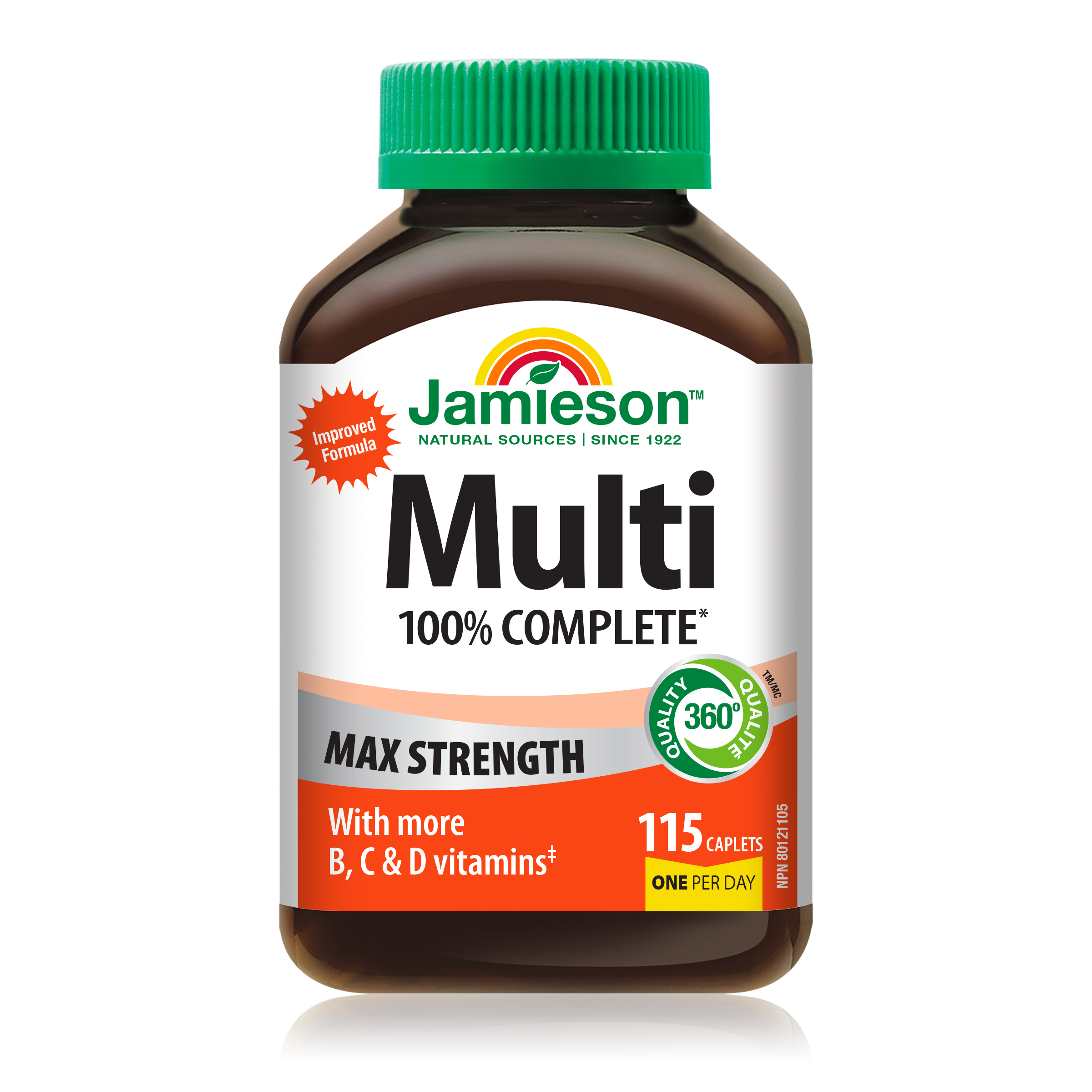
Adults: Take 1 caplet daily with food. Take a few hours before or after taking other medications. Consult a health care practitioner for use beyond 4 weeks
Price check
C$16.79≈ $12.26 USD
C$0.37 / serving
Cheaper than 90% of 798 multivitamins
Similar products
Sources & Scoring
Nutrient data (RDA, UL, and safety thresholds) sourced from the NIH Office of Dietary Supplements and the National Academies Dietary Reference Intakes (DRI).
This is not medical advice. Consult a healthcare provider before making changes to your supplement routine.
The score analyzes what's on the label: ingredient doses vs. studied ranges, chemical forms, evidence levels, and known interactions. It does not verify label accuracy or test for contaminants — for that, look for third-party certifications like USP or NSF.
Not medical advice. Consult your healthcare professional.