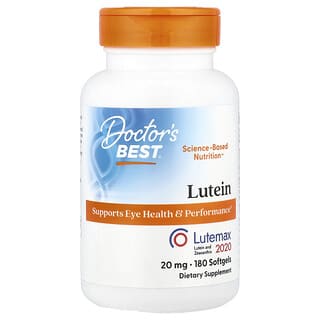
If your eyes take a daily beating from screens, this pairs a full 20mg of **Lutein** with 4mg of **Zeaxanthin** to build the macular pigment that filters blue light and protects sharp central vision. That 20mg sits at the top of the studied range — double the 10mg used in the landmark AREDS2 eye trial — and the zeaxanthin doubles that study's amount too, so you're fully dosed for macular protection.
The 5-to-1 lutein-to-zeaxanthin ratio mirrors how these carotenoids naturally distribute across your macula — lutein covering the periphery, zeaxanthin concentrating at the fovea where vision is sharpest. Both are fat-soluble, so the softgel's sunflower-oil base aids absorption, and taking one daily with food, as directed, delivers the full dose in a single softgel.
BioStacksAsk AI about this product
What it does
A combination of 2 label ingredients.
Lutein
Form not confirmedGrade —
An AREDS2 formula component; complete combinations may slow progression in selected adults with macular degeneration.
Zeaxanthin
Form not confirmedGrade —
Label lists Zeaxanthin (4 mg). Benefit information is limited.
Ingredients (2)
Other ingredients
BeeswaxCoating
Natural wax produced by honeybees, used as a coating and binding agent in softgels and tablets
Mixed TocopherolsAntioxidant
Natural vitamin E used as preservative
SoftgelCapsule
One-piece gelatin capsule shell with a plasticizer (typically glycerin), used to encapsulate liquid or oil-based supplements
Sunflower Seed OilCarrier
Common vegetable oil from sunflower seeds used as a carrier in softgels for fat-soluble nutrients
Lab testing
How to take it
With a meal containing fat
On the label
Take 1 softgel per day with food or as directed by your qualified healthcare professional.
Price check
$18.29
$0.30 / serving
Near the median of 76 lutein supplements
Similar products
Sources & Scoring
Nutrient data (RDA, UL, and safety thresholds) sourced from the NIH Office of Dietary Supplements and the National Academies Dietary Reference Intakes (DRI).
This is not medical advice. Consult a healthcare provider before making changes to your supplement routine.
The score analyzes what's on the label: ingredient doses vs. studied ranges, chemical forms, evidence levels, and known interactions. It does not verify label accuracy or test for contaminants — for that, look for third-party certifications like USP or NSF.
Not medical advice. Consult your healthcare professional.