BioStacks
Nutrition
Calories, macros & sodium.
- Sodium60 mg
Other Ingredients (10)
ErythritolSweetener
Witkowski et al. 2023 (Nature Medicine, PMID 36849732) reported elevated plasma erythritol associated with major adverse cardiovascular events (MACE) in two cohorts (n=4,000+), with in-vitro and ex-vivo evidence of enhanced platelet aggregation. Replication is ongoing; FDA and EFSA have not changed their safety positions, but the signal is real and the additive is purely cosmetic. Better-established concern: GI tolerance — single doses above ~50 g cause osmotic diarrhea. Lower threshold for children.
IsomaltSweetener
A poorly-absorbed sugar alcohol that can cause bloating, gas, and laxative effects at higher doses (EFSA notes laxative threshold for polyols). Tolerable for most, but cumulative across products.
MaltitolSweetener
Worst GI tolerance of the common sugar alcohols — laxative effect at doses above ~10–15 g/serving in many adults; threshold is lower in children. Glycemic index (~52) is significantly higher than erythritol (0) or xylitol (~7) — meaningful blood glucose impact at typical serving sizes. The 'sugar-free' marketing claim masks real metabolic effects when consumed in quantity.
Apple FlavorFlavor
A flavoring formulated to taste of apple
SpinachFood
Dried spinach (Spinacia oleracea) leaf powder, a whole-food green.
Calcium CarbonateBuffer
Common calcium salt used as a buffering agent, filler, or mineral fortification in supplements
Malic AcidAcidulant
Naturally occurring organic acid found in apples, used as a flavor enhancer and acidulant in supplements
PectinGelling Agent
Plant polysaccharide from citrus peels or apple pomace used to gel pectin-based gummies
How to Take It
Take it anytime
Timing is irrelevant — total daily intake and consistency are all that matter.
With or without food
On the label
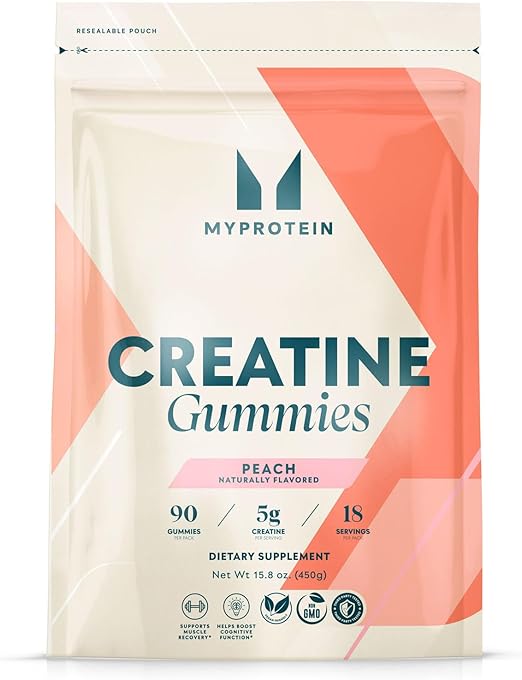
Take 4 gummies daily, or as directed by a healthcare professional.
General guidance based on the ingredients, not a substitute for the label or your doctor.
Price Check
$39.95
Pricier than 80% of 155 creatine monohydrate supplements
Track this supplement in your stack
Get personalized insights, interactions, and coverage recommendations.
Get Started FreeSimilar Supplements
Sources & Scoring
Nutrient data (RDA, UL, and safety thresholds) sourced from the NIH Office of Dietary Supplements and the National Academies Dietary Reference Intakes (DRI).
This is not medical advice. Consult a healthcare provider before making changes to your supplement routine.
The score analyzes what's on the label: ingredient doses vs. studied ranges, chemical forms, evidence levels, and known interactions. It does not verify label accuracy or test for contaminants — for that, look for third-party certifications like USP or NSF.