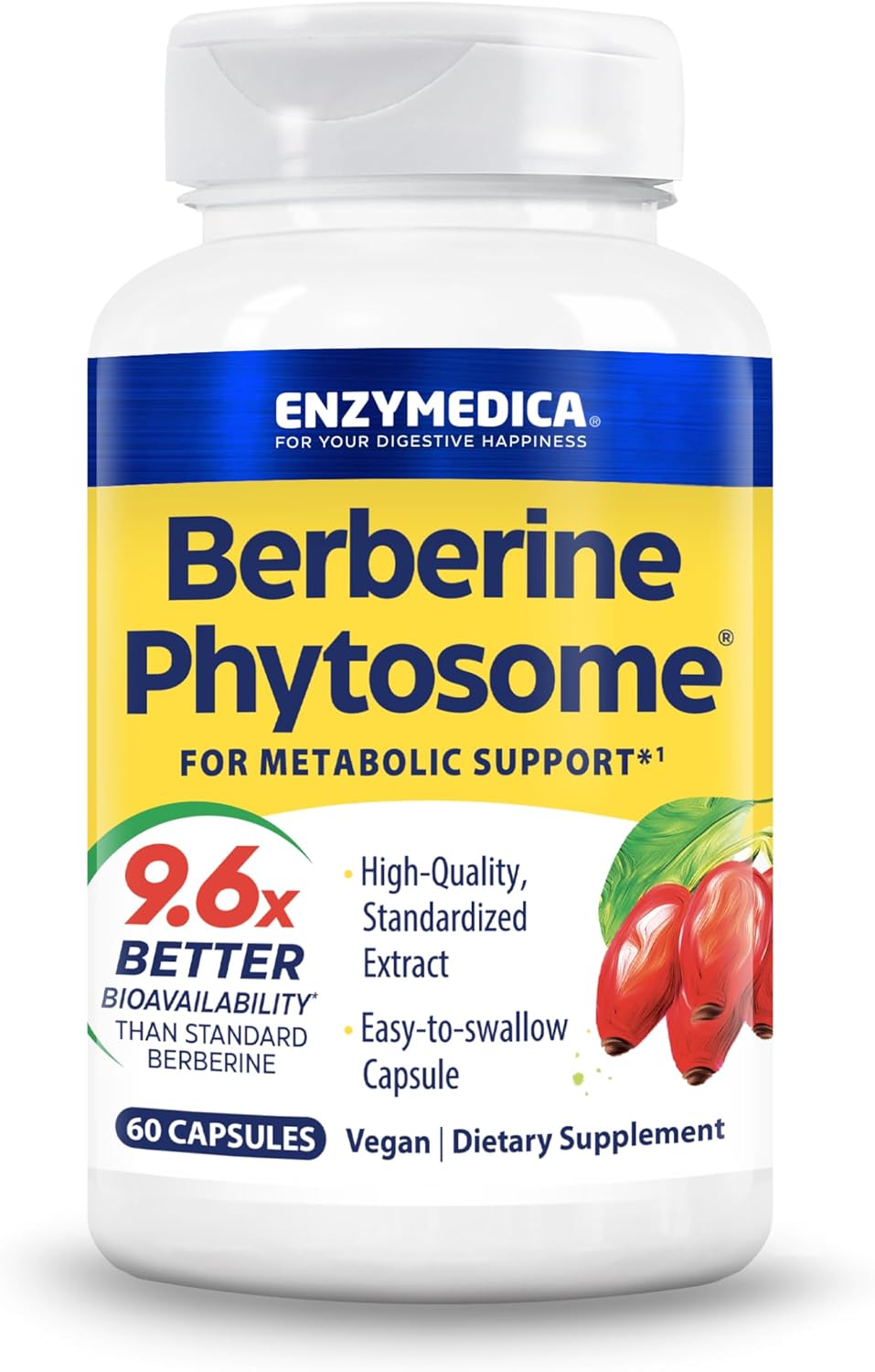
This **Berberine HCl** delivers a full 1,000mg daily dose for blood sugar and metabolic support, landing comfortably within the 500–1,500mg range used in clinical research. That's enough to meaningfully support healthy glucose levels and insulin sensitivity — where berberine has its strongest evidence, backed by multiple meta-analyses.
The catch is timing. The label has you take all three capsules at once, but clinical studies split berberine into 2–3 smaller doses across the day, taken with meals. Berberine clears your body quickly, so spacing it out gives steadier support and eases the digestive discomfort that's common when 1,000mg lands at once.
Worth flagging: berberine interacts with several common medications — metformin and other diabetes drugs, blood thinners, statins, and digoxin. If you take any of these, clear it with your doctor before starting.
What it does
Berberine HCl
Form not confirmedGrade —
Label lists Berberine Hydrochloride (1000 mg). Benefit information is limited.
Ingredients (1)
Other ingredients
Rice FlourFiller
Rice-based ingredients carry risk of inorganic arsenic contamination (FDA and Consumer Reports). Rice accumulates arsenic from soil at higher rates than other grains. Used as a cheap filler — adds nothing beneficial.
Silicon DioxideAnti-caking
Fine silica powder used to prevent clumping
HypromelloseCapsule
Plant-derived capsule material from cellulose
Lab testing
How to take it
With food
On the label
Directions: Take 3 capsules daily, with or without food.
Price check
No price yet
What 81 berberine HCl supplements cost
Similar products
Sources & Scoring
Nutrient data (RDA, UL, and safety thresholds) sourced from the NIH Office of Dietary Supplements and the National Academies Dietary Reference Intakes (DRI).
This is not medical advice. Consult a healthcare provider before making changes to your supplement routine.
The score analyzes what's on the label: ingredient doses vs. studied ranges, chemical forms, evidence levels, and known interactions. It does not verify label accuracy or test for contaminants — for that, look for third-party certifications like USP or NSF.
Not medical advice. Consult your healthcare professional.