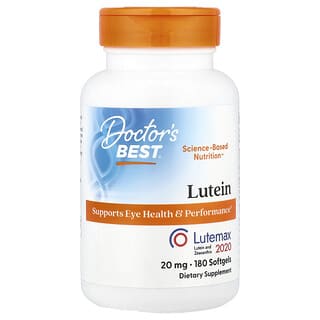
This eye-health formula pairs **lutein** at 20mg with **zeaxanthin** at 3.5mg per softgel, and both land at or above the doses used in the landmark AREDS2 trial (10mg lutein, 2mg zeaxanthin) that reduced the risk of advanced macular degeneration. You're getting a full, clinically studied dose of the two carotenoids that build up in your macula, where they filter blue light and defend the retina against oxidative damage.
These two genuinely complement each other: lutein settles into the outer macula while zeaxanthin concentrates at the fovea, the pinpoint center of your sharpest vision, so together they cover the full macular pigment. The roughly 5.7-to-1 ratio here tracks the 5-to-1 used in AREDS2. Because carotenoids are fat-soluble, the oil-based softgel helps your body actually absorb them rather than passing them through.
One softgel a day with food gets you to the studied dose, so there's no pill burden and no need to double up. This is built specifically for long-term macular health and blue-light exposure, so if you also want support for dry eyes or night vision, you'd pair it with something like omega-3s or bilberry.
BioStacks
Best for
Ingredients (2)
LuteinRich™ Lutein
100%Dose
20 mg
Target
10–20 mg
Form
—
Zeaxanthin
100%Dose
3.5 mg
Target
2–4 mg
Form
—
Other Ingredients (5)
Flaxseed OilCarrier Oil
Flaxseed (linseed) oil, an ALA omega-3 source used as a softgel carrier oil
Sunflower LecithinEmulsifier
Non-GMO, non-allergenic emulsifier derived from sunflower seeds
Safflower Seed OilCarrier
Light, neutral oil from safflower seeds used as a carrier in softgels for fat-soluble nutrients
SoftgelCapsule
One-piece gelatin capsule shell with a plasticizer (typically glycerin), used to encapsulate liquid or oil-based supplements
BeeswaxCoating
Natural wax produced by honeybees, used as a coating and binding agent in softgels and tablets
How to Take It
Take it anytime
Fat-soluble — take with a meal containing fat for better absorption. Time of day doesn't matter.
With a meal containing fat
On the label
1 softgel per day with food or as directed by a physician.
General guidance based on the ingredients, not a substitute for the label or your doctor.
Price Check
$23.07
Near the median of 76 lutein supplements
Track this supplement in your stack
Get personalized insights, interactions, and coverage recommendations.
Get Started FreeSimilar Supplements
Sources & Scoring
Nutrient data (RDA, UL, and safety thresholds) sourced from the NIH Office of Dietary Supplements and the National Academies Dietary Reference Intakes (DRI).
This is not medical advice. Consult a healthcare provider before making changes to your supplement routine.
The score analyzes what's on the label: ingredient doses vs. studied ranges, chemical forms, evidence levels, and known interactions. It does not verify label accuracy or test for contaminants — for that, look for third-party certifications like USP or NSF.