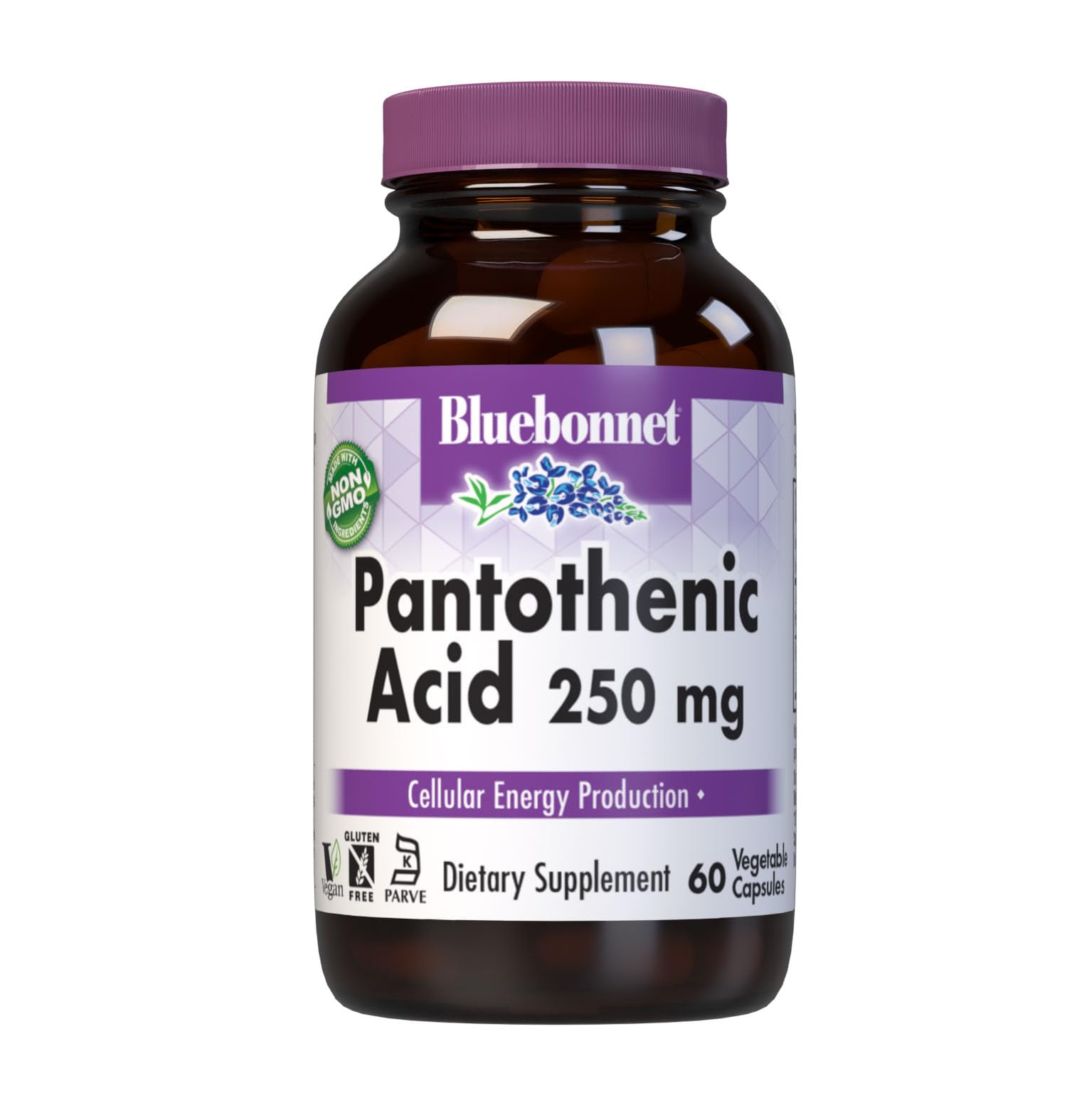
Vitamin B5 is one of the few nutrients you almost never run short on — it's found in nearly every food, so genuine deficiency is virtually unheard of. This **pantothenic acid** gives you 500mg per capsule, around 100 times the ~5mg you need daily, as calcium pantothenate, a form your body absorbs well. B5 is the building block for coenzyme A, which powers energy production and helps your body process fats, proteins, and carbs.
Because your diet already covers what you need, this high a dose mostly matters if you're genuinely short — uncommon outside of severe illness or malnutrition. The popular use for acne relied on much larger amounts (around 10g daily) with limited evidence behind it, so a single 500mg capsule isn't a skin treatment. Take it with a meal as directed.
BioStacks
Best for
Ingredients (1)
Pantothenic Acid
100%Dose
500 mg
Target
50–500 mg
Form
Premium
Other Ingredients (3)
Ascorbyl PalmitateAntioxidant
Fat-soluble form of vitamin C used as preservative
Hypoallergenic Plant FiberFiller
Plant-derived cellulose fiber used as a hypoallergenic filler, common in Thorne and Pure Encapsulations products
Capsule ShellCapsule
Generic capsule shell where the label does not specify the material. Common materials are hypromellose (HPMC) for vegetarian capsules and gelatin for traditional capsules — both are GRAS-listed and safe. Fish gelatin and pullulan variants also exist.
How to Take It
Best taken in the morning
Many people prefer B-vitamins earlier in the day; take with food to avoid nausea.
With food
On the label
As a dietary supplement, take 1 capsule daily, with a meal.
General guidance based on the ingredients, not a substitute for the label or your doctor.
Price Check
$24.60
Pricier than 95% of 23 vitamin B5 supplements
Track this supplement in your stack
Get personalized insights, interactions, and coverage recommendations.
Get Started FreeSimilar Supplements
Sources & Scoring
Nutrient data (RDA, UL, and safety thresholds) sourced from the NIH Office of Dietary Supplements and the National Academies Dietary Reference Intakes (DRI).
This is not medical advice. Consult a healthcare provider before making changes to your supplement routine.
The score analyzes what's on the label: ingredient doses vs. studied ranges, chemical forms, evidence levels, and known interactions. It does not verify label accuracy or test for contaminants — for that, look for third-party certifications like USP or NSF.