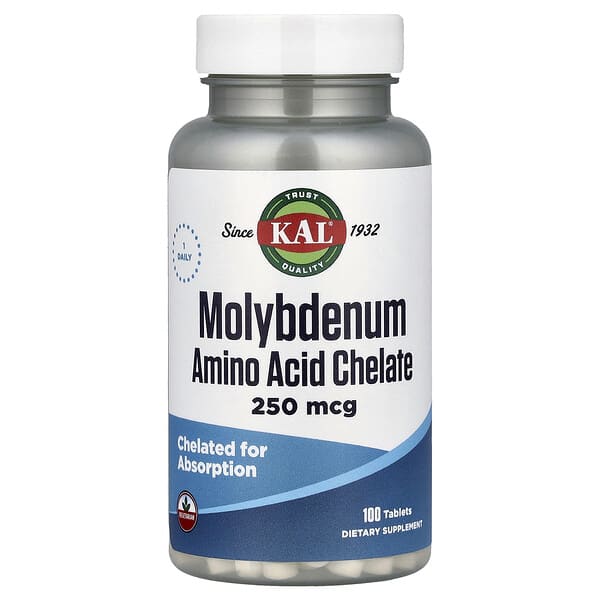
This molybdenum supplement delivers 500mcg per capsule — well above the roughly 45mcg most adults need each day, though still under the 2,000mcg safe upper limit. **Molybdenum** is an essential trace mineral, but deficiency is almost unheard of: it's abundant in legumes, grains, and even drinking water, so for most people this fills no real nutritional gap.
Its genuine niche is sulfur metabolism. Molybdenum powers the enzyme that breaks down sulfites, so this is worth considering mainly if you're sensitive to the sulfites in wine, dried fruit, or processed foods. The glycinate chelate form absorbs well, though absorption is rarely the limiting factor with this mineral.
If you eat a varied diet, you likely don't need supplemental molybdenum at all. Its clearest use cases are sulfite sensitivity or long-term parenteral nutrition — narrow situations rather than daily insurance.
BioStacks
Best for
Ingredients (1)
Molybdenum
100%Dose
500 mcg
Target
45–75 mcg
Form
Premium
Other Ingredients (5)
Silicon DioxideAnti-caking
Fine silica powder used to prevent clumping
HypromelloseCapsule
Plant-derived capsule material from cellulose
LeucineFlow Aid
Branched-chain amino acid used as a processing aid
Microcrystalline CelluloseBinder
Plant-derived cellulose used as a binder and filler in supplements
Purified WaterSolvent
Water meeting USP specifications used as solvent/vehicle in gummies and liquids
How to Take It
Take it anytime
Timing doesn't matter for this one — taking it consistently does.
With or without food
On the label
Suggested use: Take 1 capsule with or without food, or use as directed by your healthcare professional.
General guidance based on the ingredients, not a substitute for the label or your doctor.
Track this supplement in your stack
Get personalized insights, interactions, and coverage recommendations.
Get Started FreeSimilar Supplements
Sources & Scoring
Nutrient data (RDA, UL, and safety thresholds) sourced from the NIH Office of Dietary Supplements and the National Academies Dietary Reference Intakes (DRI).
This is not medical advice. Consult a healthcare provider before making changes to your supplement routine.
The score analyzes what's on the label: ingredient doses vs. studied ranges, chemical forms, evidence levels, and known interactions. It does not verify label accuracy or test for contaminants — for that, look for third-party certifications like USP or NSF.