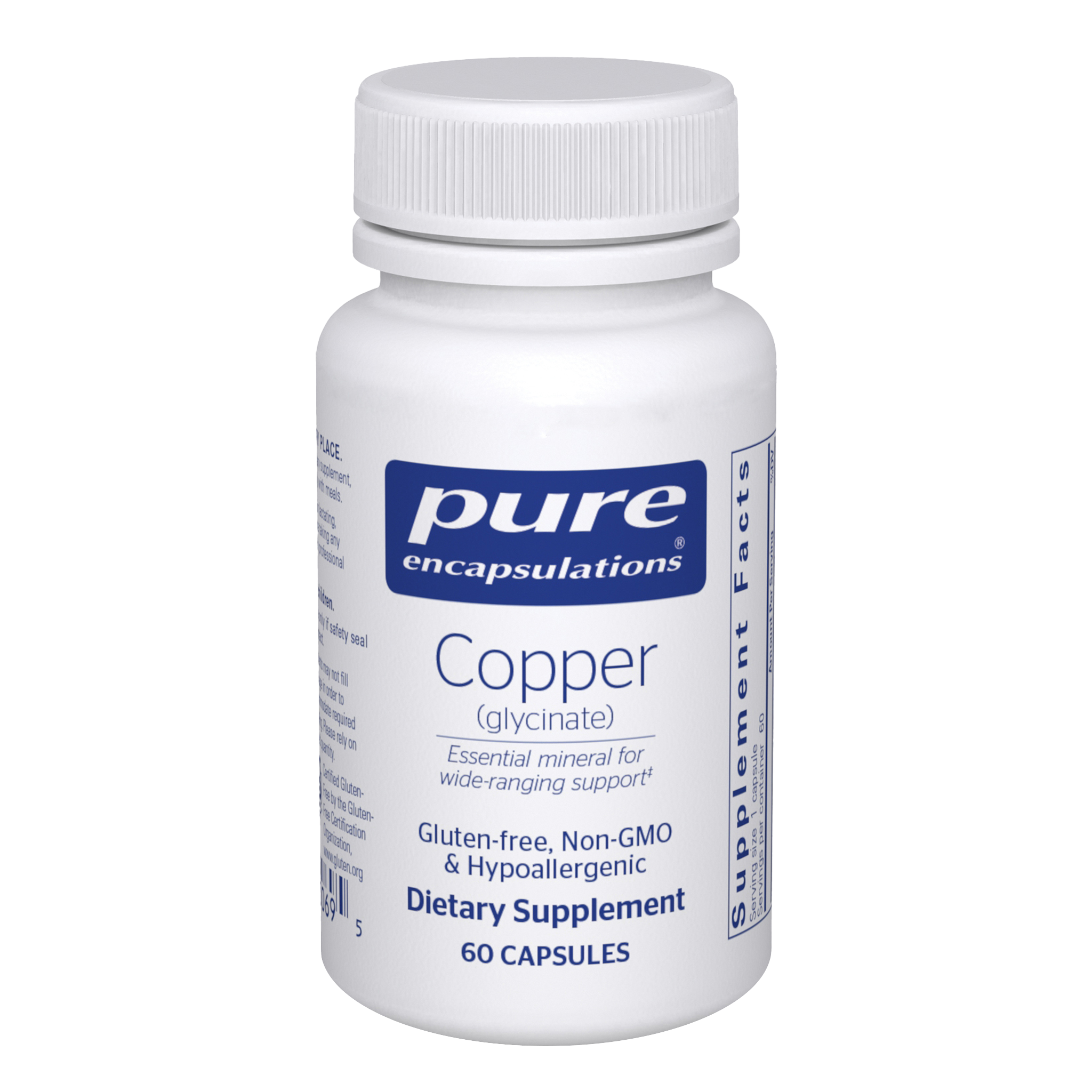
**Copper** is the mineral most people only think about when their zinc intake is high. You're getting 2.5mg in a well-absorbed copper glycinate chelate — well above the 900mcg you need daily, and enough to fully cover its roles in iron transport, collagen formation, and antioxidant defense.
This is most useful if you take a separate high-dose zinc supplement. Zinc and copper compete for absorption, and zinc above ~50mg a day can quietly drive down your copper over time — so a standalone copper tablet keeps that balance in check. Copper's role in building connective tissue also gives it relevance for skin support.
If you don't supplement zinc and eat a varied diet, you likely get enough copper from food already — this is built for correcting that zinc-copper imbalance, not a daily essential for everyone. At 2.5mg it stays well under copper's 10mg safe upper limit.
BioStacks
Other Ingredients (4)
Magnesium StearateLubricant
A salt of stearic acid used as a lubricant in tablet and capsule production
Dicalcium PhosphateBinder
Calcium and phosphorus compound used as binder
Microcrystalline CelluloseBinder
Plant-derived cellulose used as a binder and filler in supplements
Microcrystalline CelluloseBinder
Plant-derived cellulose used as a binder and filler in supplements
How to Take It
Take it anytime
Timing doesn't matter for this one — taking it consistently does.
With or without food
On the label
Suggested Use: As a dietary supplement for adults, take one (1) tablet daily, preferably with a meal or as directed by a healthcare practitioner.
General guidance based on the ingredients, not a substitute for the label or your doctor.
Price Check
No price yet
What 29 copper supplements cost
Track this supplement in your stack
Get personalized insights, interactions, and coverage recommendations.
Get Started FreeSimilar Supplements
Sources & Scoring
Nutrient data (RDA, UL, and safety thresholds) sourced from the NIH Office of Dietary Supplements and the National Academies Dietary Reference Intakes (DRI).
This is not medical advice. Consult a healthcare provider before making changes to your supplement routine.
The score analyzes what's on the label: ingredient doses vs. studied ranges, chemical forms, evidence levels, and known interactions. It does not verify label accuracy or test for contaminants — for that, look for third-party certifications like USP or NSF.