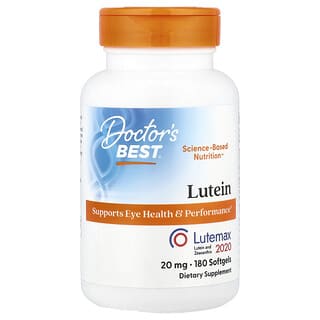
Built for long-term eye and vision support, this formula pairs 20mg of **lutein** with an equally high 20mg of **zeaxanthin** — a 1-to-1 ratio that puts unusual weight on zeaxanthin. The landmark AREDS2 trial used 10mg lutein and just 2mg zeaxanthin, so you're getting double the studied lutein and roughly ten times the zeaxanthin, with both pigments sitting at or above their clinically effective doses.
The zeaxanthin emphasis is what makes this distinctive. Zeaxanthin is the pigment that concentrates at the fovea — the center of your retina responsible for the sharpest, most detailed vision — while lutein accumulates across the surrounding macula. Because both carotenoids are dosed within effective range, you get the genuine macular-pigment synergy AREDS2 was built on: complementary coverage from the center of your retina to its periphery.
The 20mg of zeaxanthin sits well above the 2mg tested in major trials, so the amount beyond that isn't backed by added clinical benefit — not harmful, just past the point where research confirms more helps. One capsule daily with a meal covers it, since these fat-soluble pigments absorb best with food. If you specifically want a zeaxanthin-forward formula aimed at central, detailed vision, this is a strong fit.
BioStacks
Best for
Ingredients (3)
Marigold flower extract
100%Dose
565 mg
Target
10–20 mg
Form
—
Lutein
100%Dose
20 mg
Target
10–20 mg
Form
—
Zeaxanthin
100%Dose
20 mg
Target
2–4 mg
Form
—
Other Ingredients (1)
HypromelloseCapsule
Plant-derived capsule material from cellulose
How to Take It
Take it anytime
Fat-soluble — take with a meal containing fat for better absorption. Time of day doesn't matter.
With a meal containing fat
On the label
1 capsule daily, preferably with a meal.
General guidance based on the ingredients, not a substitute for the label or your doctor.
Price Check
$23.76
Near the median of 76 lutein supplements
Track this supplement in your stack
Get personalized insights, interactions, and coverage recommendations.
Get Started FreeSimilar Supplements
Sources & Scoring
Nutrient data (RDA, UL, and safety thresholds) sourced from the NIH Office of Dietary Supplements and the National Academies Dietary Reference Intakes (DRI).
This is not medical advice. Consult a healthcare provider before making changes to your supplement routine.
The score analyzes what's on the label: ingredient doses vs. studied ranges, chemical forms, evidence levels, and known interactions. It does not verify label accuracy or test for contaminants — for that, look for third-party certifications like USP or NSF.