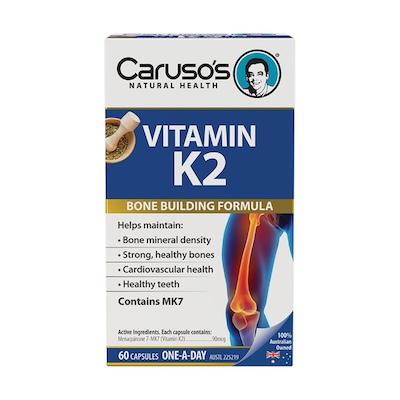
At 180 mcg, this **Vitamin K2** sits near the top of the clinically studied range for directing calcium into your bones and teeth instead of your arteries — a strong dose for bone density and cardiovascular support. It uses the MK-7 form, which stays in your blood for roughly four days, so a single daily softgel keeps levels steady where the short-acting MK-4 form would need several doses.
The MK-7 here comes from chickpea suspended in MCT oil, which aids absorption since K2 is fat-soluble. It works hand-in-hand with vitamin D — D pulls more calcium into your body and K2 directs where that calcium goes — so you'll get the most out of it paired with a D3 supplement rather than taken alone.
One caution: if you take warfarin or another blood thinner, vitamin K directly counteracts the medication — talk to your doctor before adding it.
BioStacks
Best for
Ingredients (1)
Vitamin K2
100%Dose
180 mcg
Target
90–200 mcg
Form
Premium
Other Ingredients (2)
Medium Chain Triglyceride OilCarrier
Fractionated oils rich in C8/C10 triglycerides used as neutral carrier or anti-sticking agent
Capsule ShellCapsule
Generic capsule shell where the label does not specify the material. Common materials are hypromellose (HPMC) for vegetarian capsules and gelatin for traditional capsules — both are GRAS-listed and safe. Fish gelatin and pullulan variants also exist.
How to Take It
Take it anytime
Fat-soluble — take with a meal containing fat for better absorption. Time of day doesn't matter.
With a meal containing fat
On the label
Adults take 1 veggie softgel daily with food, or as recommended by a qualified healthcare professional.
General guidance based on the ingredients, not a substitute for the label or your doctor.
Price Check
$18.97
Near the median of 144 vitamin K supplements
Track this supplement in your stack
Get personalized insights, interactions, and coverage recommendations.
Get Started FreeSimilar Supplements
Sources & Scoring
Nutrient data (RDA, UL, and safety thresholds) sourced from the NIH Office of Dietary Supplements and the National Academies Dietary Reference Intakes (DRI).
This is not medical advice. Consult a healthcare provider before making changes to your supplement routine.
The score analyzes what's on the label: ingredient doses vs. studied ranges, chemical forms, evidence levels, and known interactions. It does not verify label accuracy or test for contaminants — for that, look for third-party certifications like USP or NSF.