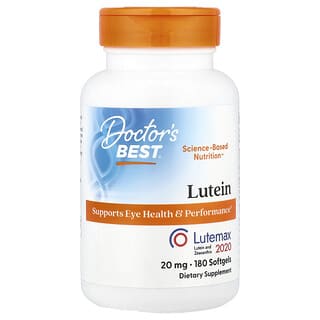
This eye-health softgel delivers **Lutein** at 20mg and **Zeaxanthin** at 2mg — the two macular pigments that filter blue light and build up in the retina — dosed at or above the amounts used in the landmark AREDS2 eye-health trial. That study used 10mg lutein and 2mg zeaxanthin daily, so you're getting double the lutein and the exact studied dose of zeaxanthin in a single daily softgel.
The pairing is a real synergy here because both hit effective levels: lutein settles into the outer macula while zeaxanthin concentrates at the fovea, the dead center of your sharpest vision, so together they cover the full macular pigment. Both come from natural sources, and the softgel's oils help these fat-soluble carotenoids absorb. This is the combination with the strongest clinical backing for protecting against age-related macular degeneration.
One thing to know: despite the "Synergistic" name, this is a focused two-carotenoid formula, not the complete AREDS2 regimen — it leaves out the vitamin C, vitamin E, zinc, and copper that trial also included. If you want the full AREDS2 protocol you'd pair this with those nutrients; if you just want clinically dosed macular pigments to protect long-term eye health, this covers that goal on its own.
BioStacks
Other Ingredients (7)
AnnattoColorant
Natural yellow-orange colorant derived from the seeds of the achiote tree (Bixa orellana)
GlycerinHumectant
Sweet-tasting liquid used in soft capsules and liquids
StarchBinder
Carbohydrate polymer used as a binder, filler, and disintegrant in tablets and capsules
Purified WaterSolvent
Water meeting USP specifications used as solvent/vehicle in gummies and liquids
Safflower Seed OilCarrier
Light, neutral oil from safflower seeds used as a carrier in softgels for fat-soluble nutrients
Sunflower Seed OilCarrier
Common vegetable oil from sunflower seeds used as a carrier in softgels for fat-soluble nutrients
Vegetable OilCarrier
Edible oils used as carriers in softgels and as processing aids
How to Take It
Take it anytime
Fat-soluble — take with a meal containing fat for better absorption. Time of day doesn't matter.
With a meal containing fat
On the label
Our clean wellness supplements are everyday solutions for an enhanced mind, body and home. For best results, take one softgel per day with food and water
General guidance based on the ingredients, not a substitute for the label or your doctor.
Price Check
$16.28
Near the median of 12 zeaxanthin supplements
Track this supplement in your stack
Get personalized insights, interactions, and coverage recommendations.
Get Started FreeSimilar Supplements
Sources & Scoring
Nutrient data (RDA, UL, and safety thresholds) sourced from the NIH Office of Dietary Supplements and the National Academies Dietary Reference Intakes (DRI).
This is not medical advice. Consult a healthcare provider before making changes to your supplement routine.
The score analyzes what's on the label: ingredient doses vs. studied ranges, chemical forms, evidence levels, and known interactions. It does not verify label accuracy or test for contaminants — for that, look for third-party certifications like USP or NSF.