BioStacksAsk AI about this product
What it does
A combination of 24 label ingredients.
Vitamin A
Form not confirmedGrade —
Supports normal vision, immune function and the maintenance of healthy tissues.
Citrus Bioflavonoids
Form not confirmedGrade —
Label lists Citrus Bioflavonoids (15 mg). Benefit information is limited.
Ingredients (26)
Other ingredients
Silicon DioxideAnti-caking
Fine silica powder used to prevent clumping
Magnesium StearateLubricant
A salt of stearic acid used as a lubricant in tablet and capsule production
Coating (unspecified)Coating
Generic tablet coating declaration where the label does not itemize the coating's components; modern aqueous film coatings are typically cellulose-based (HPMC) with a plasticizer
Microcrystalline CelluloseBinder
Plant-derived cellulose used as a binder and filler in supplements
Capsule ShellCapsule
Generic capsule shell where the label does not specify the material. Common materials are hypromellose (HPMC) for vegetarian capsules and gelatin for traditional capsules — both are GRAS-listed and safe. Fish gelatin and pullulan variants also exist.
Microcrystalline CelluloseBinder
Plant-derived cellulose used as a binder and filler in supplements
Microcrystalline CelluloseBinder
Plant-derived cellulose used as a binder and filler in supplements
PotassiumMineral
Essential mineral naturally present in many plant-based supplement ingredients
Lab testing
How to take it
With a meal containing fat
Keep it away from coffee, tea and dairy
Space it a couple of hours from Calcium and Green Tea Leaf Extract
On the label
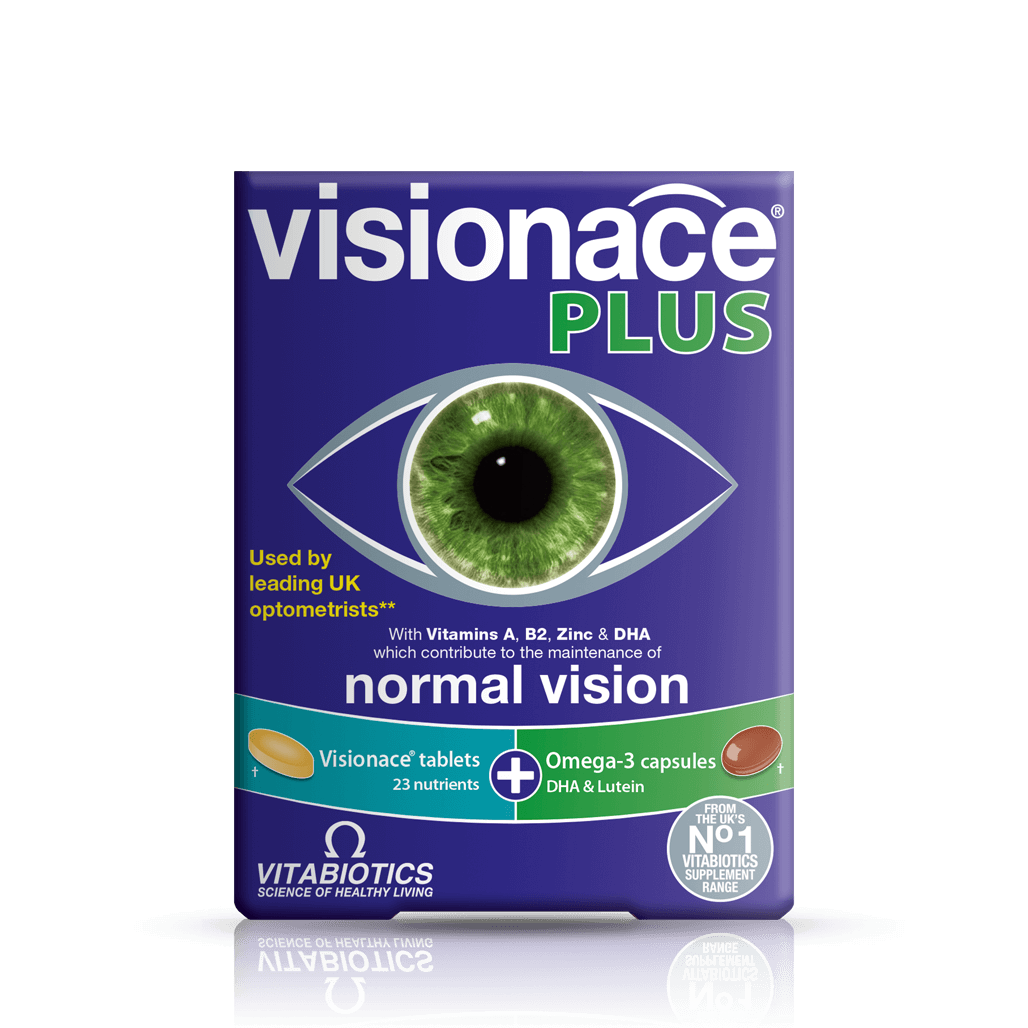
ONE VISIONACE® TABLET PER DAY, PLUS ONE OMEGA-3 DHA CAPSULE PER DAY. Swallow each with water or a cold drink and take with your main meal. Not to be chewed. Do not exceed the recommended intake. To be taken on a full stomach. This comprehensive formula replaces other Visionace® multivitamins. There is no need to take an additional multivitamin. No preservatives or artificial colours Gluten free No yeast or lactose Visionace is not tested on animals
Price check
£23.25≈ $29.53 USD
£0.83 / serving
Near the median of 798 multivitamins
Similar products


Sources & Scoring
Nutrient data (RDA, UL, and safety thresholds) sourced from the NIH Office of Dietary Supplements and the National Academies Dietary Reference Intakes (DRI).
This is not medical advice. Consult a healthcare provider before making changes to your supplement routine.
The score analyzes what's on the label: ingredient doses vs. studied ranges, chemical forms, evidence levels, and known interactions. It does not verify label accuracy or test for contaminants — for that, look for third-party certifications like USP or NSF.
Not medical advice. Consult your healthcare professional.