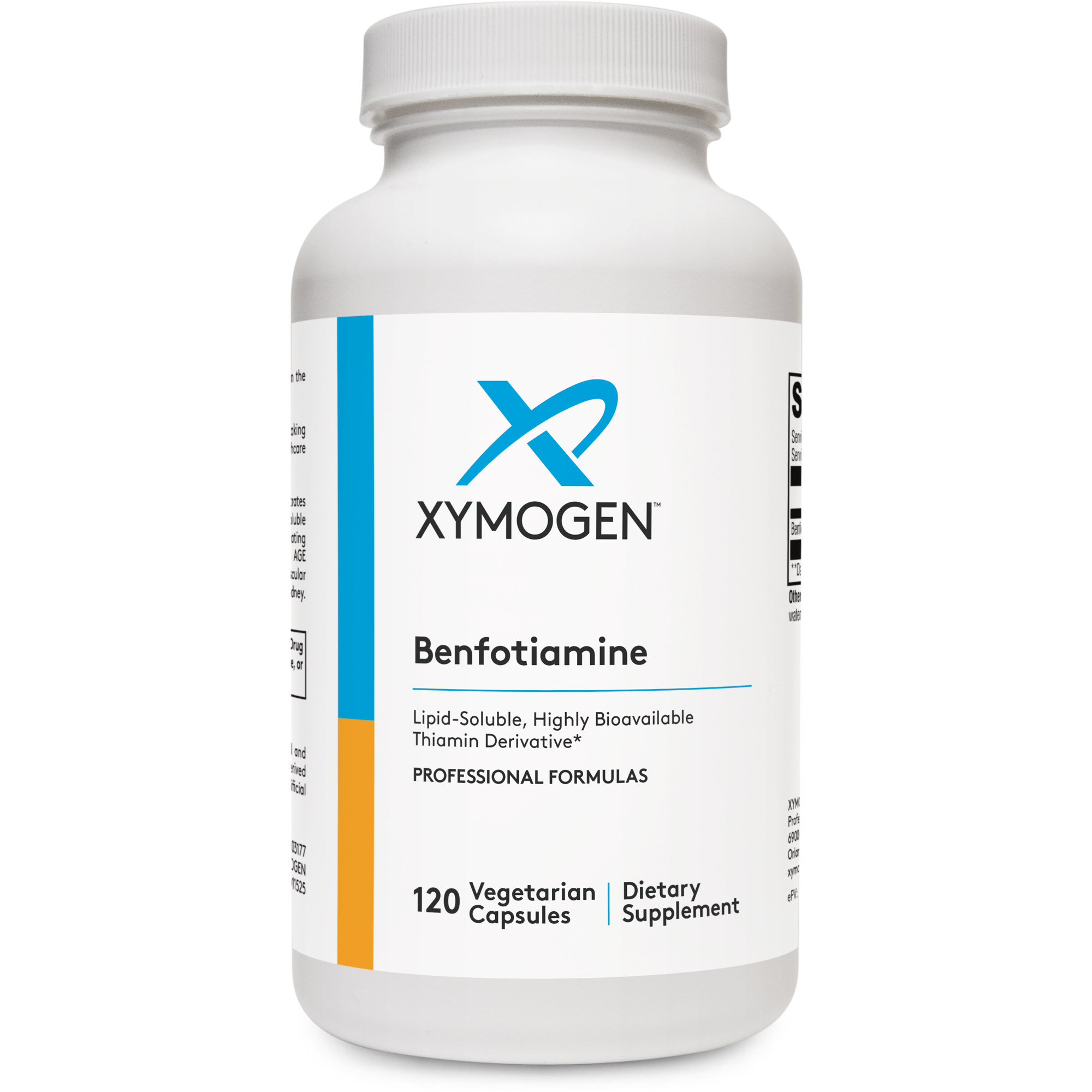
This **Benfotiamine** supplement delivers vitamin B1 in a fat-soluble form built for energy metabolism and nerve support, at 80mg per capsule. Clinical research on benfotiamine runs roughly 80 to 300mg daily, so one capsule already reaches the effective minimum, and the label lets you take it up to four times a day to climb toward the upper end.
The form is what makes this work. Benfotiamine bypasses the gut transporters that cap how much standard thiamine your body can absorb, reaching far higher blood levels — which is why it's the form tied to nerve health and glucose metabolism rather than just topping off a basic B1 requirement.
If you're using it for general energy, one capsule a day covers you. For nerve support specifically, the studied benefit sits nearer the 300mg end, so you'd want two to four capsules daily — the flexible dosing makes that easy to dial in.
BioStacks
Best for
Ingredients (1)
Thiamine
100%Dose
320 mg
Target
80–300 mg
Form
Premium
Other Ingredients (5)
HypromelloseCapsule
Plant-derived capsule material from cellulose
Microcrystalline CelluloseBinder
Plant-derived cellulose used as a binder and filler in supplements
Purified WaterSolvent
Water meeting USP specifications used as solvent/vehicle in gummies and liquids
Sodium Stearyl FumarateLubricant
A standard tablet/capsule lubricant, often used in place of magnesium stearate.
Purified WaterSolvent
Water meeting USP specifications used as solvent/vehicle in gummies and liquids
How to Take It
Best taken in the morning
Many people prefer B-vitamins earlier in the day; take with food to avoid nausea.
With food
On the label
Take 1 capsule 1-4 times a day with food, or as directed by a health care practitioner.
General guidance based on the ingredients, not a substitute for the label or your doctor.
Price Check
No price yet
What 57 vitamin B1 supplements cost
Track this supplement in your stack
Get personalized insights, interactions, and coverage recommendations.
Get Started FreeSimilar Supplements
Sources & Scoring
Nutrient data (RDA, UL, and safety thresholds) sourced from the NIH Office of Dietary Supplements and the National Academies Dietary Reference Intakes (DRI).
This is not medical advice. Consult a healthcare provider before making changes to your supplement routine.
The score analyzes what's on the label: ingredient doses vs. studied ranges, chemical forms, evidence levels, and known interactions. It does not verify label accuracy or test for contaminants — for that, look for third-party certifications like USP or NSF.