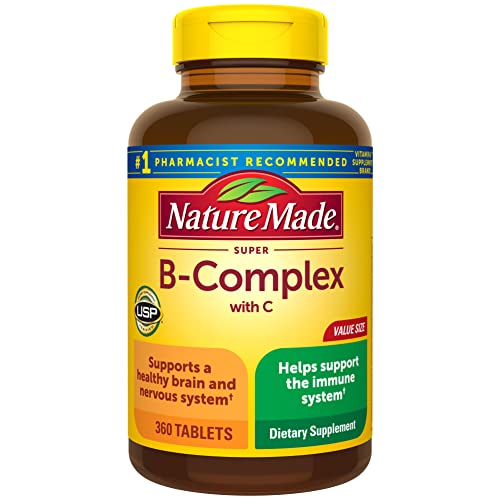
Nature Made Super B-Complex covers all eight B vitamins to support everyday energy metabolism, the process your body uses to turn food into usable energy, and it leads with a full 100mg of **thiamine** (B1) right at the top of its typical supplement range. Several of the other B vitamins, though, land closer to basic daily-requirement levels than the higher doses used in targeted research, so this is dependable everyday coverage rather than a high-potency formula.
**Riboflavin** (20mg) and **niacin** (25mg) are dosed well enough to contribute meaningfully, and you also get 150mg of added **vitamin C**. The B vitamins here use standard synthetic forms, which your body absorbs and uses fine if you are generally healthy.
Where it thins out is the rest of the panel: vitamin B6 (2mg), B12 (15mcg), and pantothenic acid (5.5mg) cover daily needs but fall short of the larger doses some people look for. One thing worth knowing is that the 400mcg of **folate** is folic acid, the synthetic form that people with an MTHFR gene variant convert less efficiently than active methylfolate.
BioStacks
Ingredients (10)
Niacin
100%Dose
25 mg
Target
25–500 mg
Form
Standard
Pantothenic Acid
11%Dose
5.5 mg
Target
50–500 mg
Form
Premium
Vitamin B6
8%Dose
2 mg
Target
25–100 mg
Form
Premium
Biotin
3%Dose
30 mcg
Target
1000–5000 mcg
Form
—
Folic Acid
100%Dose
400 mcg
Target
400–800 mcg
Form
Budget
Other Ingredients (6)
Magnesium StearateLubricant
A salt of stearic acid used as a lubricant in tablet and capsule production
Polyethylene Glycol (Coating)Coating
A polyether polymer used as a tablet coating and plasticizer
Silicon DioxideAnti-caking
Fine silica powder used to prevent clumping
Microcrystalline CelluloseBinder
Plant-derived cellulose used as a binder and filler in supplements
Croscarmellose SodiumDisintegrant
Cross-linked cellulose derivative used as a superdisintegrant
HypromelloseCapsule
Plant-derived capsule material from cellulose
How to Take It
Best taken in the morning
Many people prefer B-vitamins earlier in the day; take with food to avoid nausea.
With food
On the label
Suggested use: Take one tablet daily with a meal. For easier swallowing, take with water before and during ingestion.
General guidance based on the ingredients, not a substitute for the label or your doctor.
Price Check
No price yet
What 375 vitamin C supplements cost
Track this supplement in your stack
Get personalized insights, interactions, and coverage recommendations.
Get Started FreeSimilar Supplements
Sources & Scoring
Nutrient data (RDA, UL, and safety thresholds) sourced from the NIH Office of Dietary Supplements and the National Academies Dietary Reference Intakes (DRI).
This is not medical advice. Consult a healthcare provider before making changes to your supplement routine.
The score analyzes what's on the label: ingredient doses vs. studied ranges, chemical forms, evidence levels, and known interactions. It does not verify label accuracy or test for contaminants — for that, look for third-party certifications like USP or NSF.