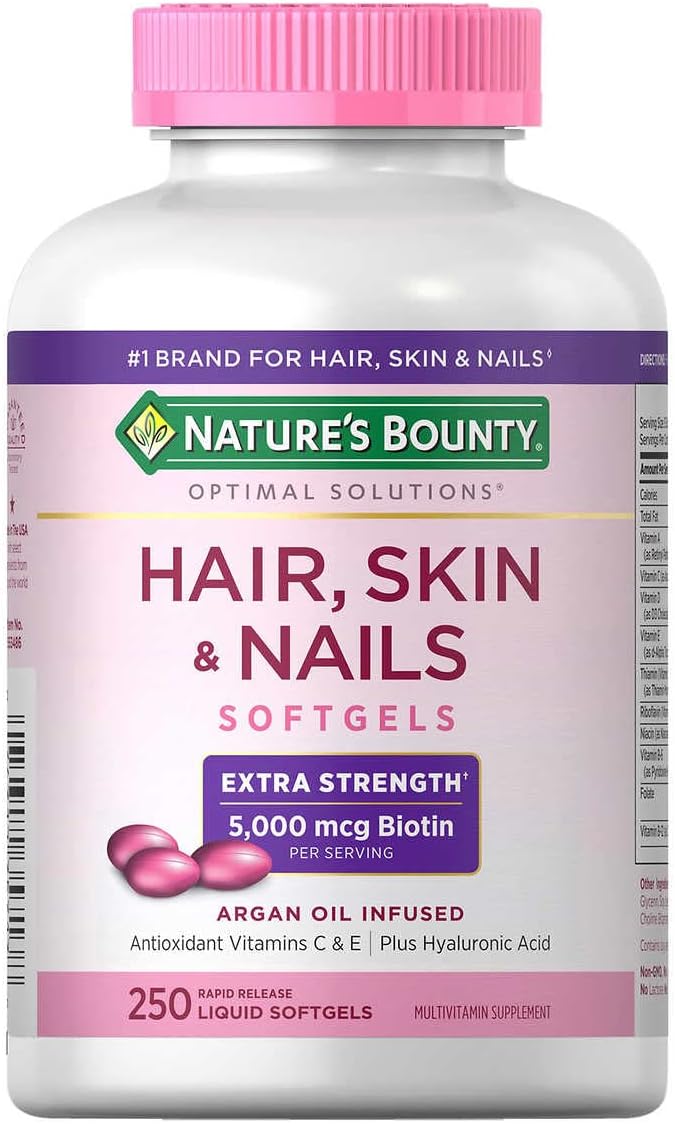
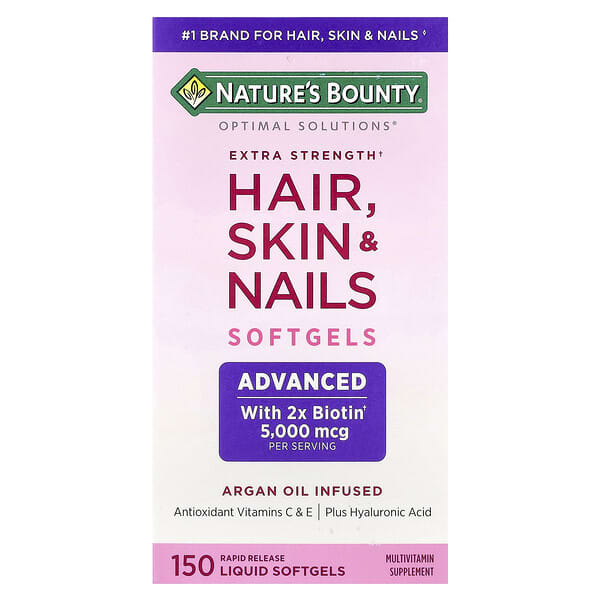
This hair, skin, and nails formula is built around a 5,000mcg **biotin** megadose, but that headline ingredient is where the science is weakest. Biotin only reliably improves hair and nails in people who are genuinely deficient, which is rare, and there are essentially no RCTs showing it does anything for everyone else. You're getting the full studied 5,000mcg, but for most people that dose won't move the needle on hair or nail growth.
The supporting vitamins do small but real work. **Vitamin C** at 90mg helps your body build collagen, the protein that gives skin and hair their structure, though that's closer to a daily baseline than the 250mg-plus used in supplement research. You're also getting **zinc** at 7.5mg, roughly half the studied dose for skin and nail support, plus a full 30mg of silicon and a solid dose of vitamin A, both of which contribute to normal skin and hair maintenance.
Where the label leans on skin-specialist ingredients, the doses don't follow through. The **collagen** here is 60mg against the 2,500-10,000mg used in skin studies, and **hyaluronic acid** sits at 1mg versus the 80-200mg in hydration trials, so neither is present in a meaningful amount. One practical note: a 5,000mcg biotin dose can distort lab tests for thyroid and heart markers, so tell your doctor you take it before any bloodwork.
BioStacks
Best for
Ingredients (21)
Vitamin D3
100%Dose
2000 IU
Target
1000–5000 IU
Form
Premium
Biotin
100%Dose
5000 mcg
Target
1000–5000 mcg
Form
—
Niacin
100%Dose
25 mg
Target
25–500 mg
Form
Standard
Vitamin A
100%Dose
1515.2 mcg
Target
700–1500 mcg
Form
Standard
Pantothenic Acid
30%Dose
15 mg
Target
50–500 mg
Form
Premium
Other Ingredients (4)
Soy LecithinEmulsifier
Widely used emulsifier derived from soybeans
GelatinCapsule
Protein derived from collagen, used in traditional capsule shells
Vegetable OilCarrier
Edible oils used as carriers in softgels and as processing aids
GlycerinHumectant
Sweet-tasting liquid used in soft capsules and liquids
How to Take It
Take it anytime
No evidence a formula this broad works better at any particular hour. Take it with a meal containing fat — the vitamins A, D and E in it absorb poorly without one.
With a meal containing fat
Space it a couple of hours from Iron and Calcium
On the label
Suggested Use: Adults, take three softgels daily, preferably with a meal.
General guidance based on the ingredients, not a substitute for the label or your doctor.
Price Check
No price yet
What 798 multivitamins cost
Track this supplement in your stack
Get personalized insights, interactions, and coverage recommendations.
Get Started FreeSimilar Supplements
Sources & Scoring
Nutrient data (RDA, UL, and safety thresholds) sourced from the NIH Office of Dietary Supplements and the National Academies Dietary Reference Intakes (DRI).
This is not medical advice. Consult a healthcare provider before making changes to your supplement routine.
The score analyzes what's on the label: ingredient doses vs. studied ranges, chemical forms, evidence levels, and known interactions. It does not verify label accuracy or test for contaminants — for that, look for third-party certifications like USP or NSF.