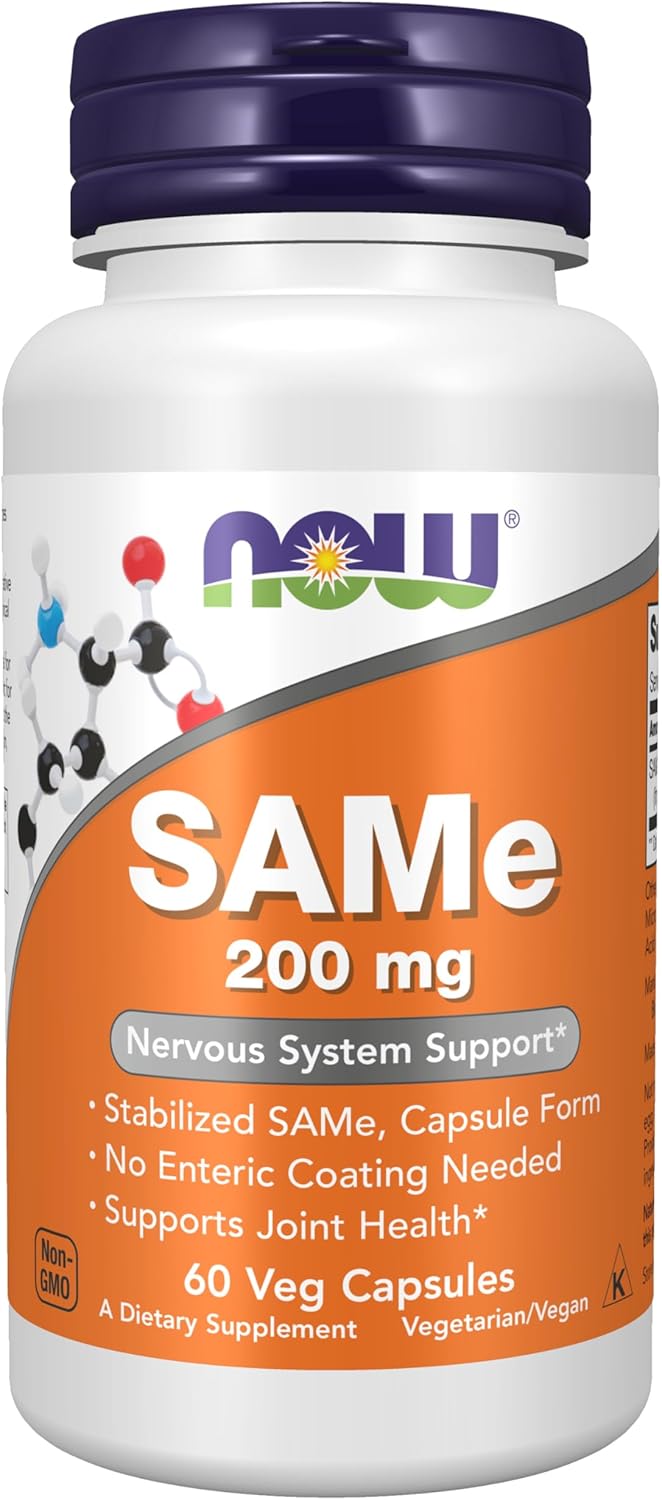
This **SAMe** tablet delivers 400mg of active S-adenosylmethionine, the best-studied natural compound for low mood, where trials have found it comparable to prescription antidepressants. That 400mg sits at the floor of the 400–1,600mg studied range — a real, usable dose, though most mood and joint-pain trials run higher.
The label's one-to-four-tablets-a-day window lets you climb to 800–1,600mg, where the strongest evidence for both depression and osteoarthritis sits; two tablets daily is a sensible target. The enteric-coated tosylate form matters, since SAMe is chemically fragile — take it on an empty stomach for best absorption.
One real caveat: SAMe can trigger mania in people with bipolar disorder, and combined with SSRIs or other antidepressants it raises serotonin-syndrome risk. If you take any mood medication, talk to your doctor first.
BioStacks
Best for
Ingredients (1)
SAMe
50%Dose
400 mg
Target
800–1600 mg
Form
Premium
Other Ingredients (12)
Propylene GlycolSolvent
Liquid used to dissolve and preserve supplement ingredients
Silicon DioxideAnti-caking
Fine silica powder used to prevent clumping
Ascorbic AcidAntioxidant
Vitamin C used as an antioxidant preservative in supplements to prevent oxidation
Ascorbyl PalmitateAntioxidant
Fat-soluble form of vitamin C used as preservative
Calcium CarbonateBuffer
Common calcium salt used as a buffering agent, filler, or mineral fortification in supplements
Citric AcidAcidulant
Natural acid derived from citrus fruits
Croscarmellose SodiumDisintegrant
Cross-linked cellulose derivative used as a superdisintegrant
Hydroxypropyl CelluloseBinder
An inert modified-cellulose polymer used as a binder, film-former, and disintegrant.
How to Take It
Best taken in the morning
Take in the morning on an empty stomach — it can be activating and may disturb sleep later in the day.
On an empty stomach
Space it a couple of hours from 5-HTP
On the label
As a dietary supplement, take one tablet one to four times per day with water.
Do not combine with St. John's Wort
Each of these raises serotonin activity on top of St. John's Wort, and together they can trigger serotonin syndrome — agitation, rapid heartbeat, raised blood pressure. Not without medical supervision.
General guidance based on the ingredients, not a substitute for the label or your doctor.
Price Check
$30.79
Cheaper than 65% of 24 SAMe supplements
Track this supplement in your stack
Get personalized insights, interactions, and coverage recommendations.
Get Started FreeSimilar Supplements
Sources & Scoring
Nutrient data (RDA, UL, and safety thresholds) sourced from the NIH Office of Dietary Supplements and the National Academies Dietary Reference Intakes (DRI).
This is not medical advice. Consult a healthcare provider before making changes to your supplement routine.
The score analyzes what's on the label: ingredient doses vs. studied ranges, chemical forms, evidence levels, and known interactions. It does not verify label accuracy or test for contaminants — for that, look for third-party certifications like USP or NSF.