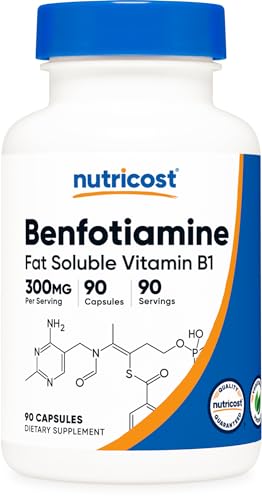
Built for nerve health and glucose metabolism, this **Benfotiamine** gives you a full 250mg in one capsule — an effective dose right inside the 80–300mg range used in clinical research. Benfotiamine is a fat-soluble form of vitamin B1 that absorbs far better than standard thiamine, so it reaches the nerve and muscle cells where your body struggles to deliver ordinary B1.
The practical advantage is that a single capsule already lands you in effective territory, so you don't have to stack pills to reach a studied dose. The 10mg of standard thiamine alongside it is minor — your benefit comes from the benfotiamine, the form with the real backing for blood-sugar and nerve support.
If your goal is glucose metabolism or nerve comfort, this is where benfotiamine has its strongest evidence. The label allows up to four capsules daily, but for most people one 250mg capsule is enough.
BioStacks
Best for
Ingredients (2)
Benfotiamine
100%Dose
250 mg
Target
80–300 mg
Form
Premium
Thiamine
40%Dose
10 mg
Target
25–100 mg
Form
Premium
Other Ingredients (5)
Silicon DioxideAnti-caking
Fine silica powder used to prevent clumping
Vegetable StearateLubricant
A plant-derived salt of stearic acid (typically magnesium or calcium) used as a tablet lubricant
Dicalcium PhosphateBinder
Calcium and phosphorus compound used as binder
Microcrystalline CelluloseBinder
Plant-derived cellulose used as a binder and filler in supplements
Microcrystalline CelluloseBinder
Plant-derived cellulose used as a binder and filler in supplements
How to Take It
Best taken in the morning
Many people prefer B-vitamins earlier in the day; take with food to avoid nausea.
With food
On the label
Take one (1) capsule one to four times daily, or as recommended by a healthcare practitioner.
General guidance based on the ingredients, not a substitute for the label or your doctor.
Price Check
$22.50
Pricier than 77% of 57 vitamin B1 supplements
Track this supplement in your stack
Get personalized insights, interactions, and coverage recommendations.
Get Started FreeSimilar Supplements
Sources & Scoring
Nutrient data (RDA, UL, and safety thresholds) sourced from the NIH Office of Dietary Supplements and the National Academies Dietary Reference Intakes (DRI).
This is not medical advice. Consult a healthcare provider before making changes to your supplement routine.
The score analyzes what's on the label: ingredient doses vs. studied ranges, chemical forms, evidence levels, and known interactions. It does not verify label accuracy or test for contaminants — for that, look for third-party certifications like USP or NSF.