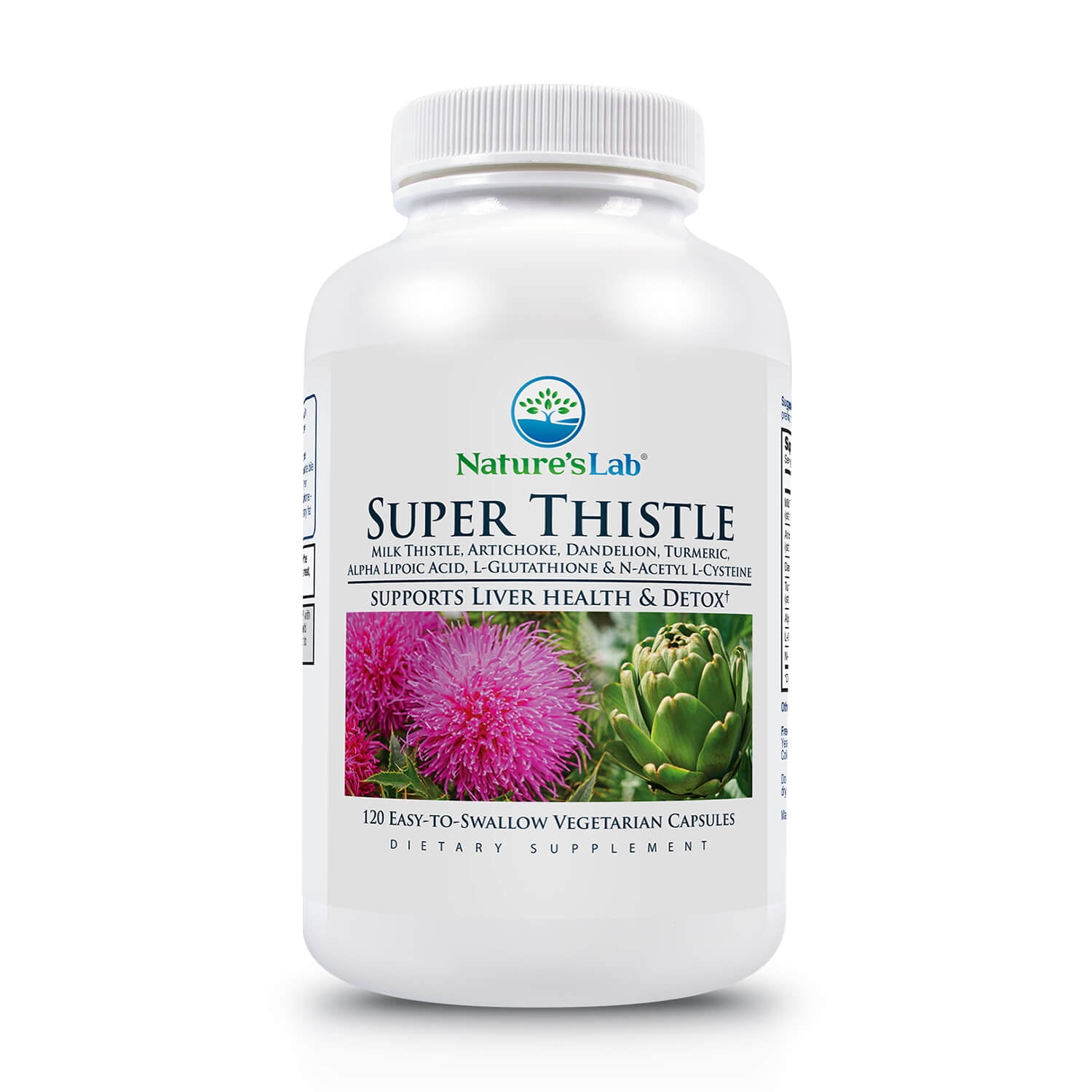
This is a liver and antioxidant formula built around 500mg of **Glutathione**, but absorption is the catch: it uses the reduced form, which your gut largely breaks down into amino acids before it reaches your cells. Glutathione is the body's master antioxidant and a driver of liver detoxification, and 500mg falls within the 250–1,000mg range used in research — but those trials relied on forms designed to survive digestion. Swallowing standard reduced glutathione is an inefficient way to actually raise your levels; taking NAC, its direct precursor, is a more dependable route to the same goal.
**Milk Thistle** delivers 80mg of silymarin, its active fraction, below the roughly 150mg where most liver studies begin. **Alpha-Lipoic Acid** appears at 50mg, well under the 300–600mg used in trials — ALA does help regenerate glutathione, so it fits the formula's logic, but 50mg won't contribute much on its own.
The honest takeaway: every active here points at liver and antioxidant support, but the headline form absorbs poorly and the two supporting doses are too low to pull much weight. If raising glutathione is your actual goal, an NAC product will likely do more for you per capsule.
BioStacks
Other Ingredients (4)
Magnesium StearateLubricant
A salt of stearic acid used as a lubricant in tablet and capsule production
Silicon DioxideAnti-caking
Fine silica powder used to prevent clumping
HypromelloseCapsule
Plant-derived capsule material from cellulose
Microcrystalline CelluloseBinder
Plant-derived cellulose used as a binder and filler in supplements
How to Take It
Take it anytime
Silymarin barely dissolves in water — a fat-containing meal meaningfully improves absorption.
With a meal containing fat
ALA does better on an empty stomach, but something else in this bottle needs food. Taking the whole product with a meal is the better trade — an upset stomach is why most people stop.
On the label
Suggested Usage: Take 1 capsule daily, preferably on an empty stomach.
General guidance based on the ingredients, not a substitute for the label or your doctor.
Price Check
No price yet
What 56 GSH supplements cost
Track this supplement in your stack
Get personalized insights, interactions, and coverage recommendations.
Get Started FreeSimilar Supplements
Sources & Scoring
Nutrient data (RDA, UL, and safety thresholds) sourced from the NIH Office of Dietary Supplements and the National Academies Dietary Reference Intakes (DRI).
This is not medical advice. Consult a healthcare provider before making changes to your supplement routine.
The score analyzes what's on the label: ingredient doses vs. studied ranges, chemical forms, evidence levels, and known interactions. It does not verify label accuracy or test for contaminants — for that, look for third-party certifications like USP or NSF.